Colonia de Sant Jordi: How to Get There, Beaches and Cabrera
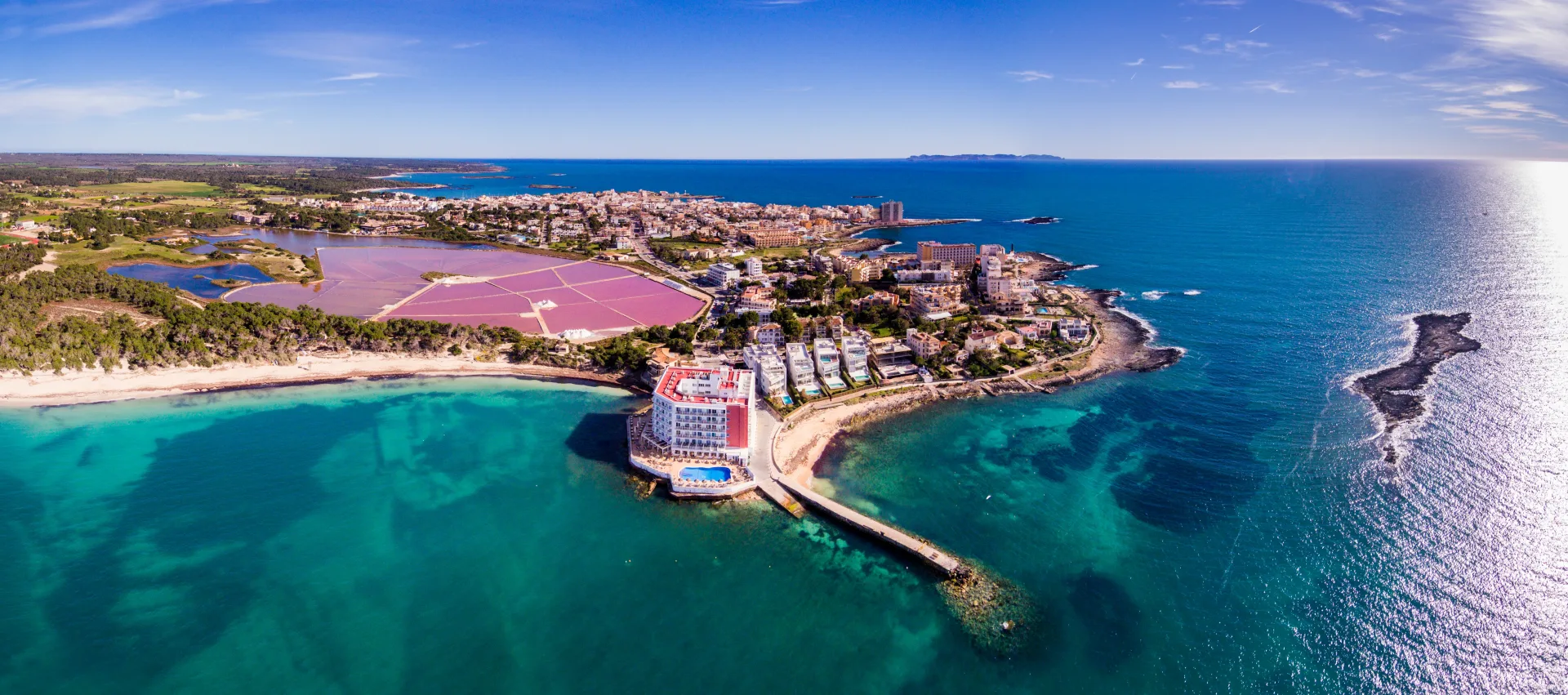
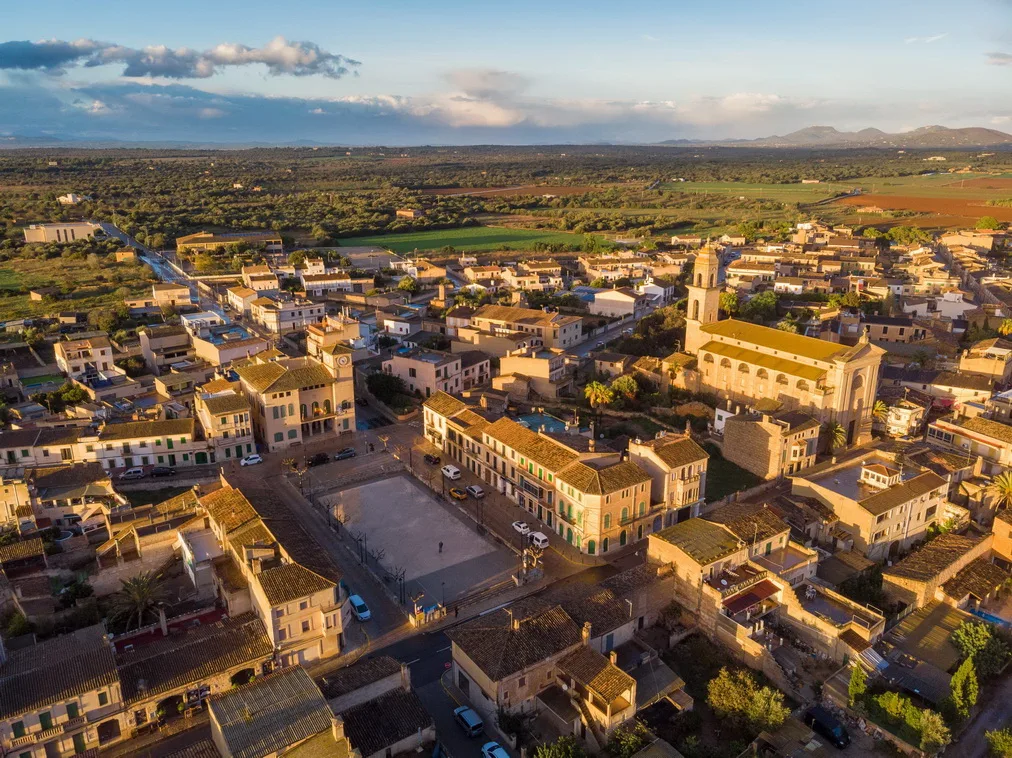
Colonia de Sant Jordi sits at the bottom of Mallorca, where the island curves around a wide lagoon and the land flattens out into salt marshes and open coast. It started as a fishing village and still feels like one for most of the year. If you want the south coast without the overdevelopment, this is the place.
How to get to Colonia de Sant Jordi from Palma Airport
Colonia de Sant Jordi is about 55 km from Palma Airport. A private transfer or rental car takes around 45 minutes via the MA-19 and Ma-6040. The public bus takes roughly 90 minutes and requires two changes.
| Option | Typical time | Changes | Best for |
|---|---|---|---|
| Private transfer | 45 min | None | Door-to-door travel, luggage and late arrivals |
| Rental car | 45 min | None | Reaching beaches outside the town |
| Public bus | 90 min | Two | Daytime travel on a smaller budget |
Private transfer is the easiest option, especially if you’re arriving with family, luggage, or after a long flight. A private transfer from Palma Airport to Colonia de Sant Jordi with Janer Bus costs from 70 EUR for up to 4 passengers. Your driver meets you at arrivals and takes you directly to your accommodation, no changes or connections.
{{cta}}
By car, take the MA-19 south from the airport toward Campos, then follow signs for Colonia de Sant Jordi. Straightforward drive with no complicated navigation. A rental car makes sense if you plan to explore the surrounding beaches independently, as some of the best ones require driving.
By bus, take route 501 from the airport to Palma’s main bus station, connect to route 517 toward Campos, and change again for the local service to Colonia de Sant Jordi. The full journey takes around 90 minutes and costs approximately 9 EUR. Fine for daytime travel, but connections are unreliable in the evening and don’t run late at night.
What is Colonia de Sant Jordi like? Is it worth visiting?
This is the question we hear most often, and the honest answer is: it depends on what you’re after.
Out of high season (May, June, September, October), Colonia de Sant Jordi is genuinely quiet. The year-round population sits at around 2,860 people. The harbor is the heart of town, with fishing boats tied up alongside pleasure craft, a row of restaurants facing the water, and a pace that feels nothing like a tourist resort. You can walk the whole town center in 20 minutes.
In July and August, things change. Visitors flood in, mostly Spanish and German families, and the beaches fill up. The restaurants get busy and you’ll need reservations for the good places. But even at peak summer, it never tips into mayhem. There’s no strip, no club row. The atmosphere stays family-oriented and calm.
What makes Colonia de Sant Jordi different from most Mallorcan resorts: immediate access to some of the most unspoiled coastline on the island, a working harbor with genuine character, the only departure point for Cabrera National Park, and those salt pans with their famous pink water.
It’s not for everyone. If you want packed entertainment, a nightlife scene, or wall-to-wall shopping, this probably isn’t it. But most people who come here once end up coming back, and that says something.
The best beaches in Colonia de Sant Jordi
The beaches here are genuinely excellent, and this is what most people come for. The area has some of the most unspoiled coastline on the island, ranging from sheltered urban beaches to wild coves with no road access. Here’s what’s available.
Platja d’Es Port
The main beach, right in the center of town. Sandy, reasonably sheltered, and an easy walk from any accommodation in the area. Sun lounger and umbrella rental runs around 14 EUR per day, there’s a lifeguard in summer, and the water is calm and clear. Not the most dramatic beach on this list, but the most practical: you can walk from the sand to the restaurants in five minutes.
Es Dolç
A smaller, quieter beach on the east side of the harbor. Less busy than Es Port, slightly more sheltered, and often preferred by locals over the main beach. A good option when Es Port feels crowded.
Es Carbó
Walk south along the coast for about 30 minutes (or drive and park nearby) and you reach Es Carbó. A long sandy beach with clear water and very few people compared to the central beaches. This is reportedly where the Spanish Royal Family comes to swim when they’re on the island. The lack of facilities keeps the crowds down: no bars, no lounger rental, no services. Bring everything you need, including water.
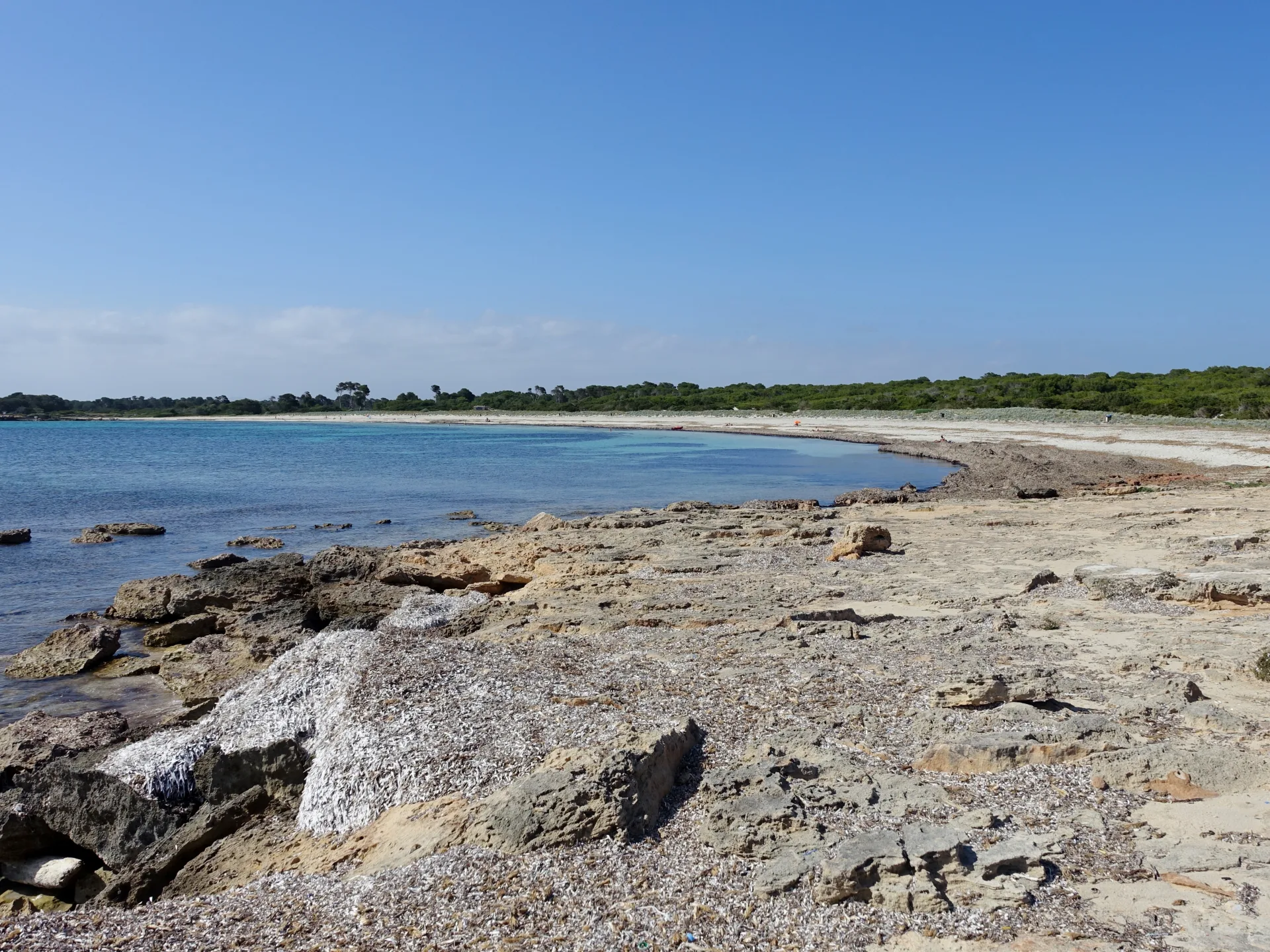
Cala Galiota
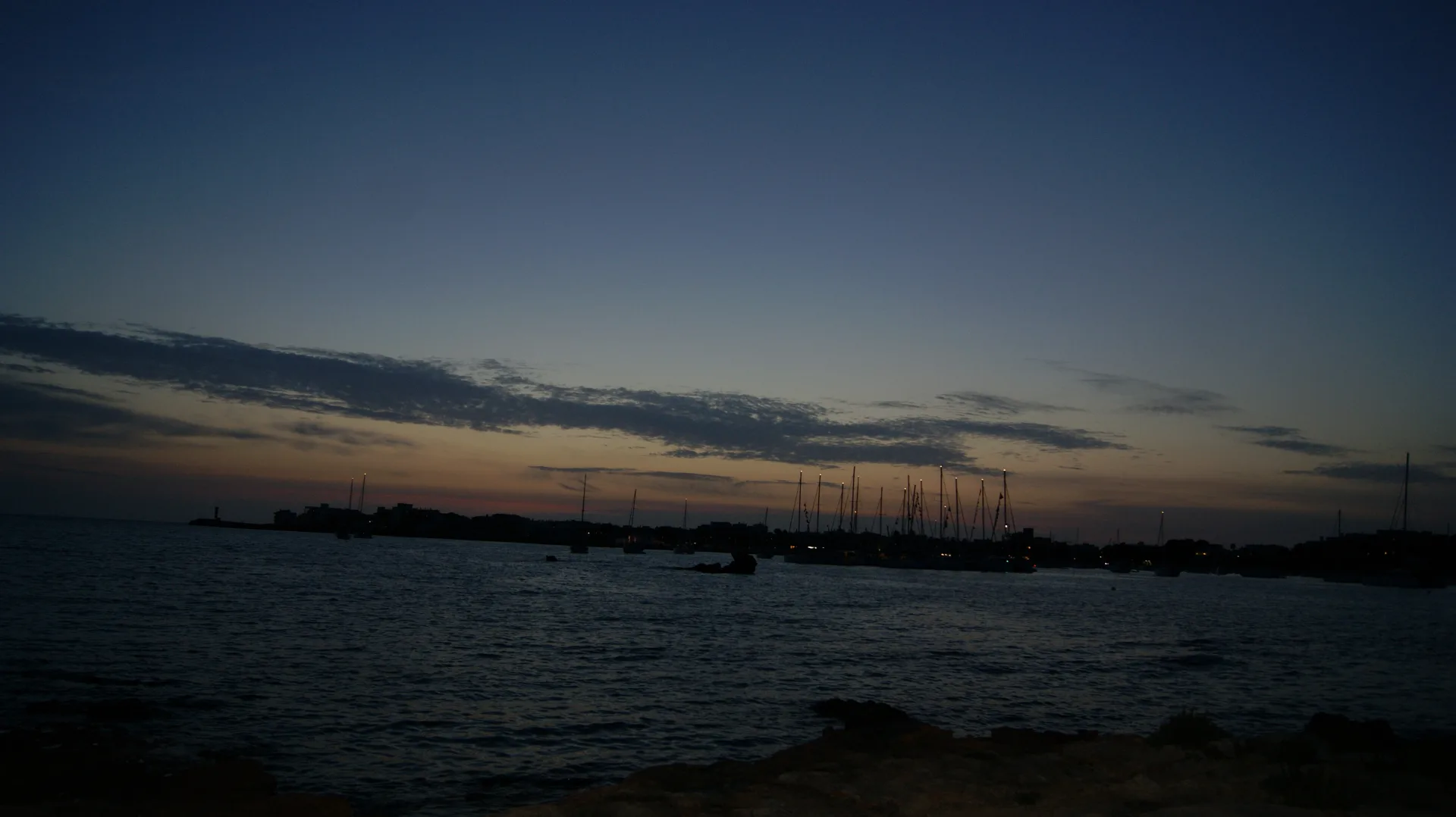
A small rocky cove about a 2-minute walk from the town center. Not really a swimming beach, but the best spot in town to watch the sunset. Locals come here in the early evening with drinks, and the atmosphere is relaxed and unhurried. Worth a short detour on a clear evening.
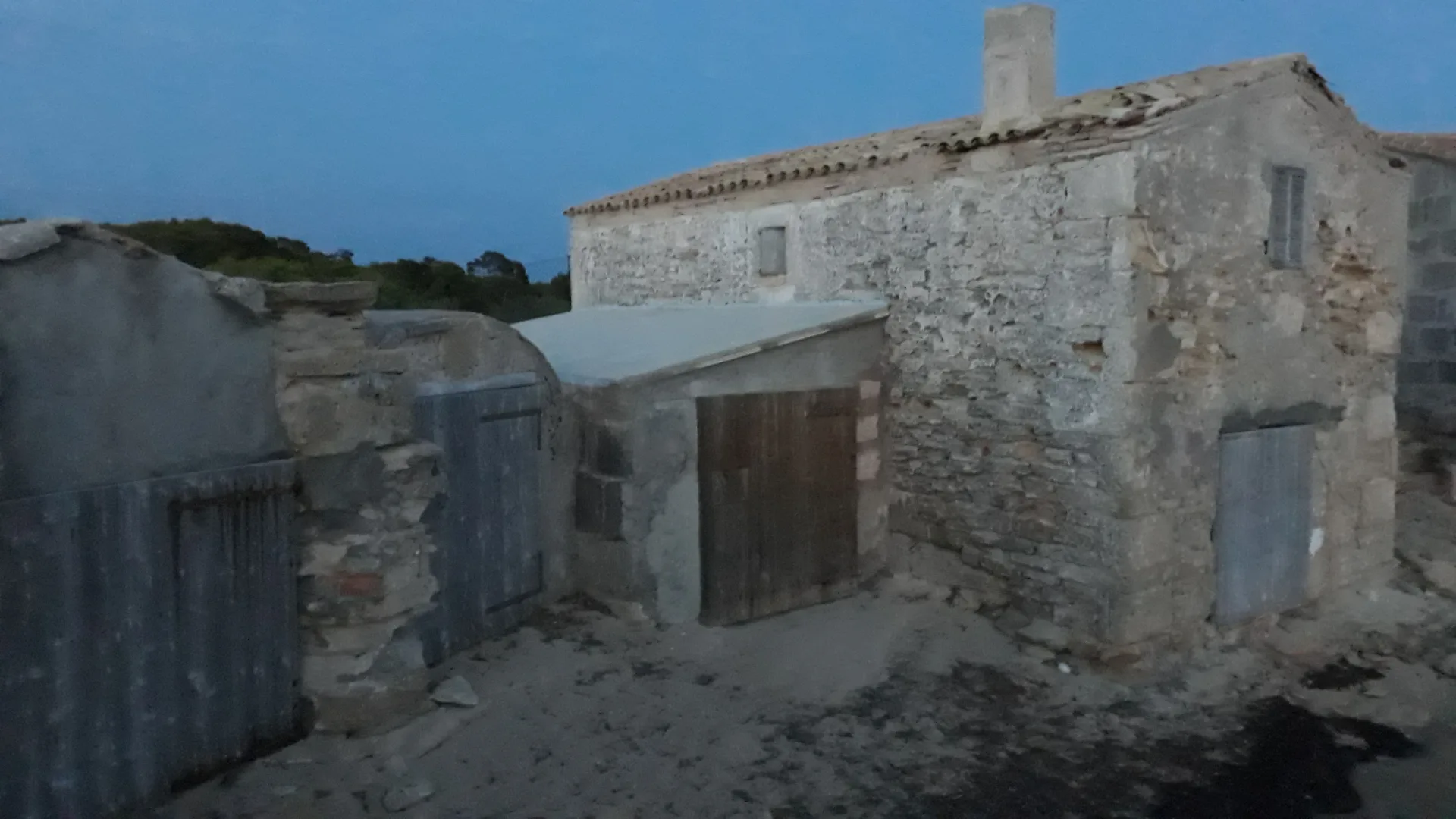
Ses Roquetes and Es Caragol
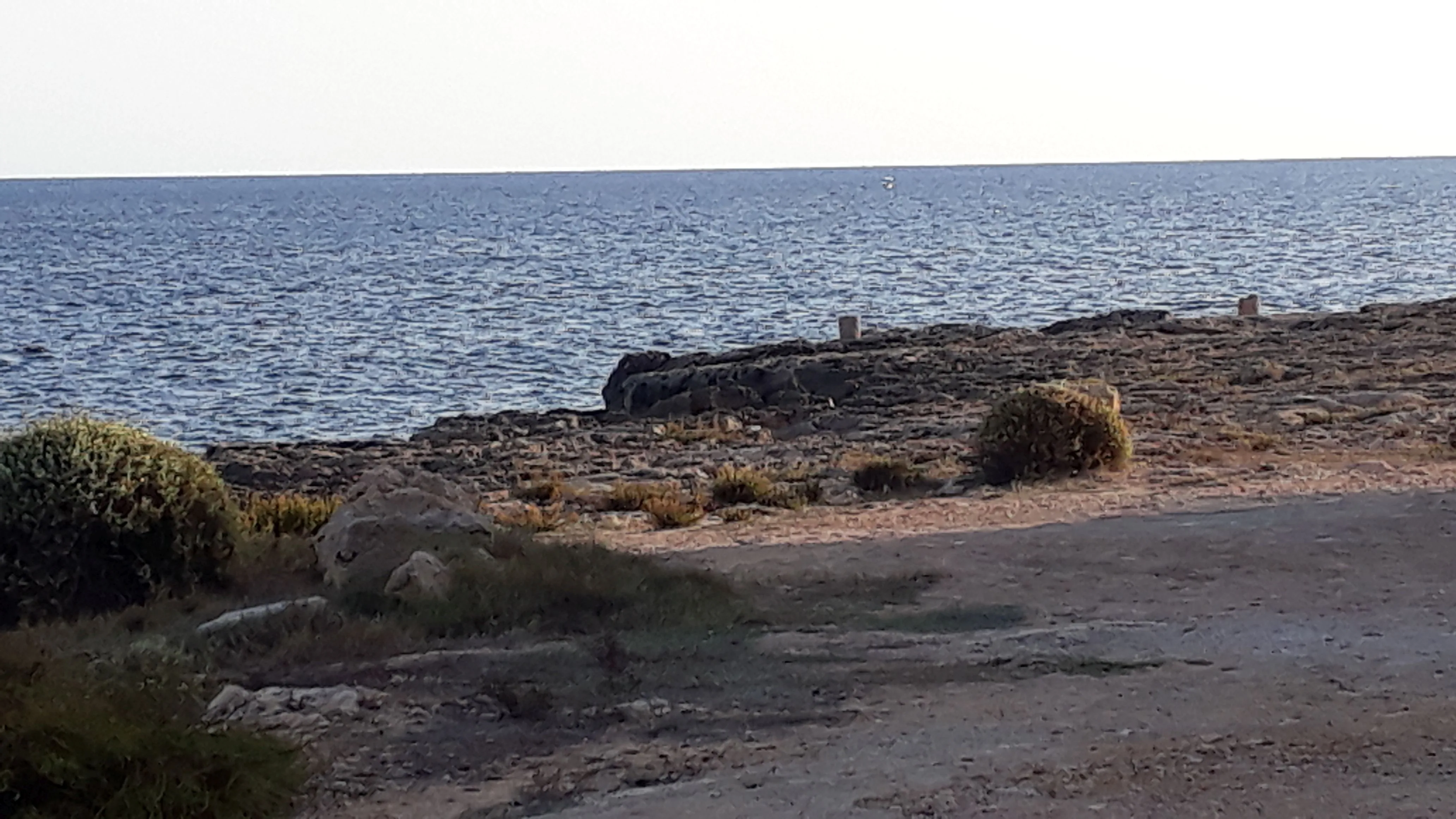
These are the wilder beaches further south, with no road access. Es Caragol in particular is one of the most beautiful beaches in this part of Mallorca: wide, sandy, exceptionally clear water, and almost entirely undeveloped. You either walk (about 45 minutes from town) or take a water taxi from the harbor. No facilities at all, so bring everything. Worth every bit of effort.
Es Trenc
Technically about 2.2 km up the coast from town, but no guide to this area would be complete without it. Es Trenc stretches for roughly 2 km with fine white sand and water that genuinely looks Caribbean. It’s protected land, so there’s no development behind it: no hotels, no built-up chiringuito strip. One beach bar at the western end. In July and August, parking fills up early and isn’t free, so arrive before 9:00 or take the shuttle bus from Campos. Worth the early start.
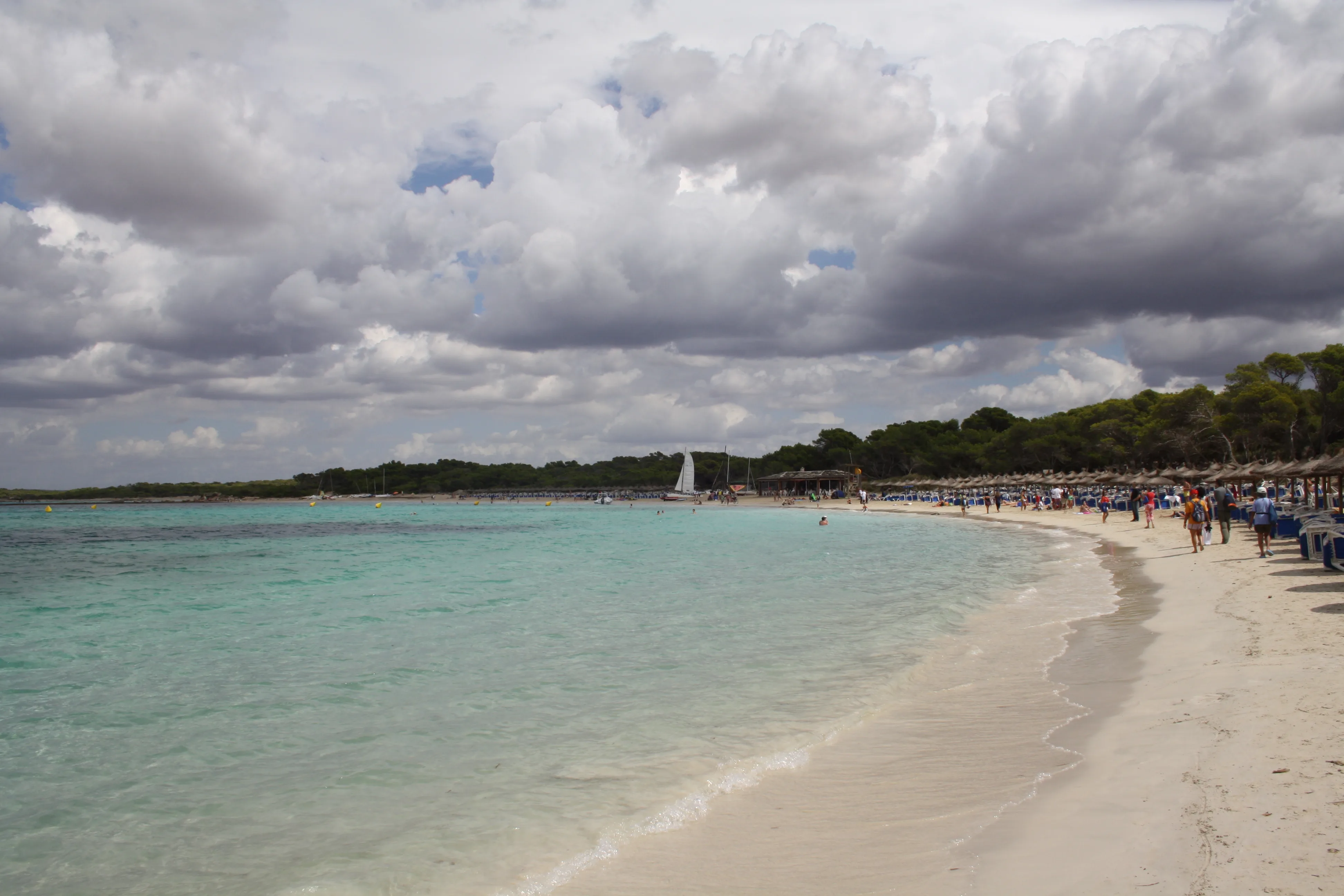
Beach comparison
| Beach | Distance from center | Facilities | Crowd level | Best for |
|---|---|---|---|---|
| Platja d’Es Port | 0 min walk | Full (loungers, lifeguard) | Medium-high | Families, convenience |
| Es Dolç | 5 min walk | Basic | Low-medium | Quiet day |
| Es Carbó | 30 min walk | None | Low | Peaceful swim |
| Cala Galiota | 2 min walk | None | Low | Sunsets |
| Es Caragol | 45 min walk | None | Low | Wild beach day |
| Es Trenc | 2.2 km | One bar (west end) | High | Iconic beaches |
{{cta}}
The Cabrera boat trip: what to expect
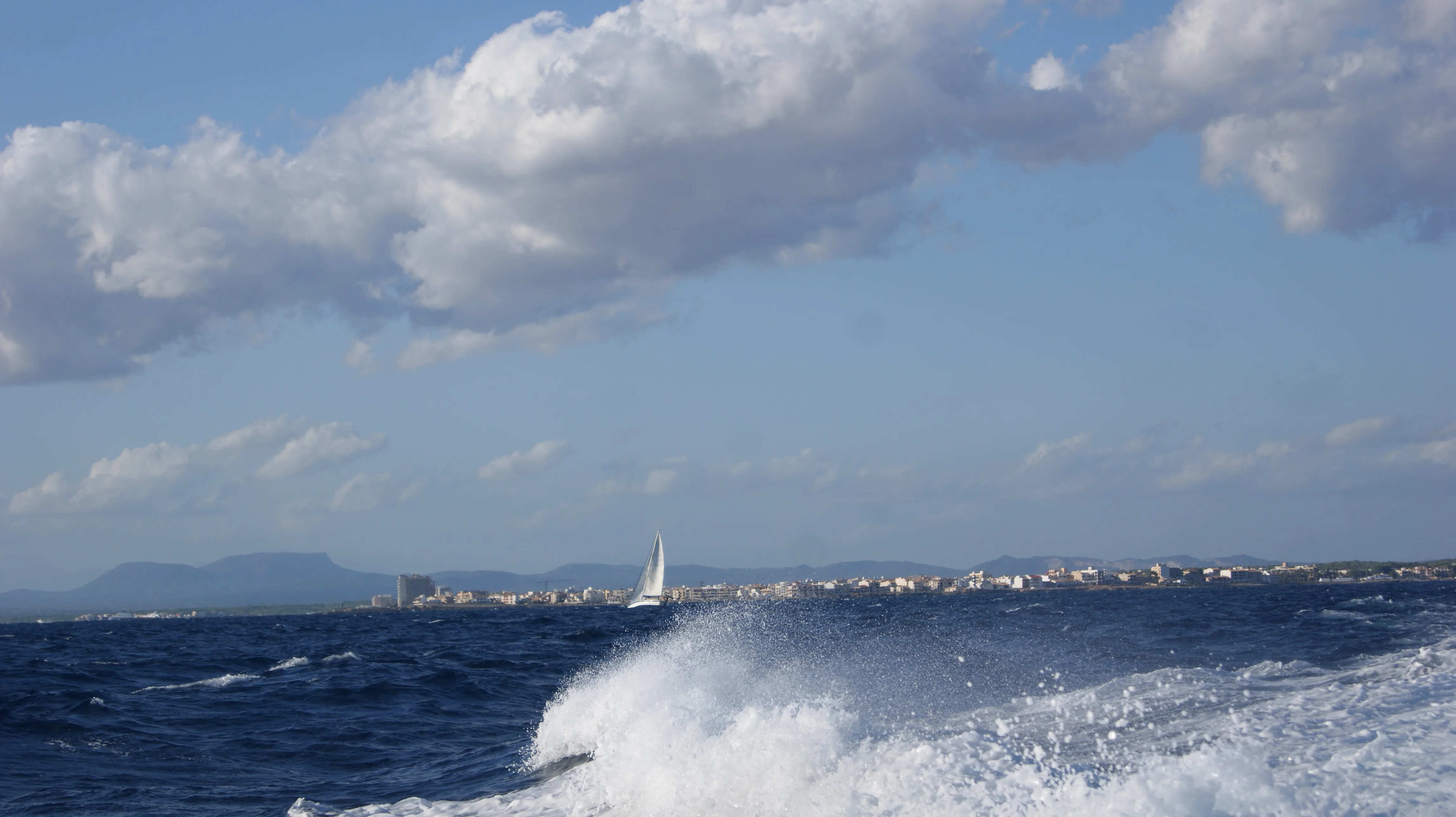
Cabrera is a small island about 10 km south of Colonia de Sant Jordi, now the centerpiece of an uninhabited national park. The waters around it are strictly protected, fishing is banned, and the marine life is exceptional. The only way to visit is by licensed boat tour departing from the harbor.
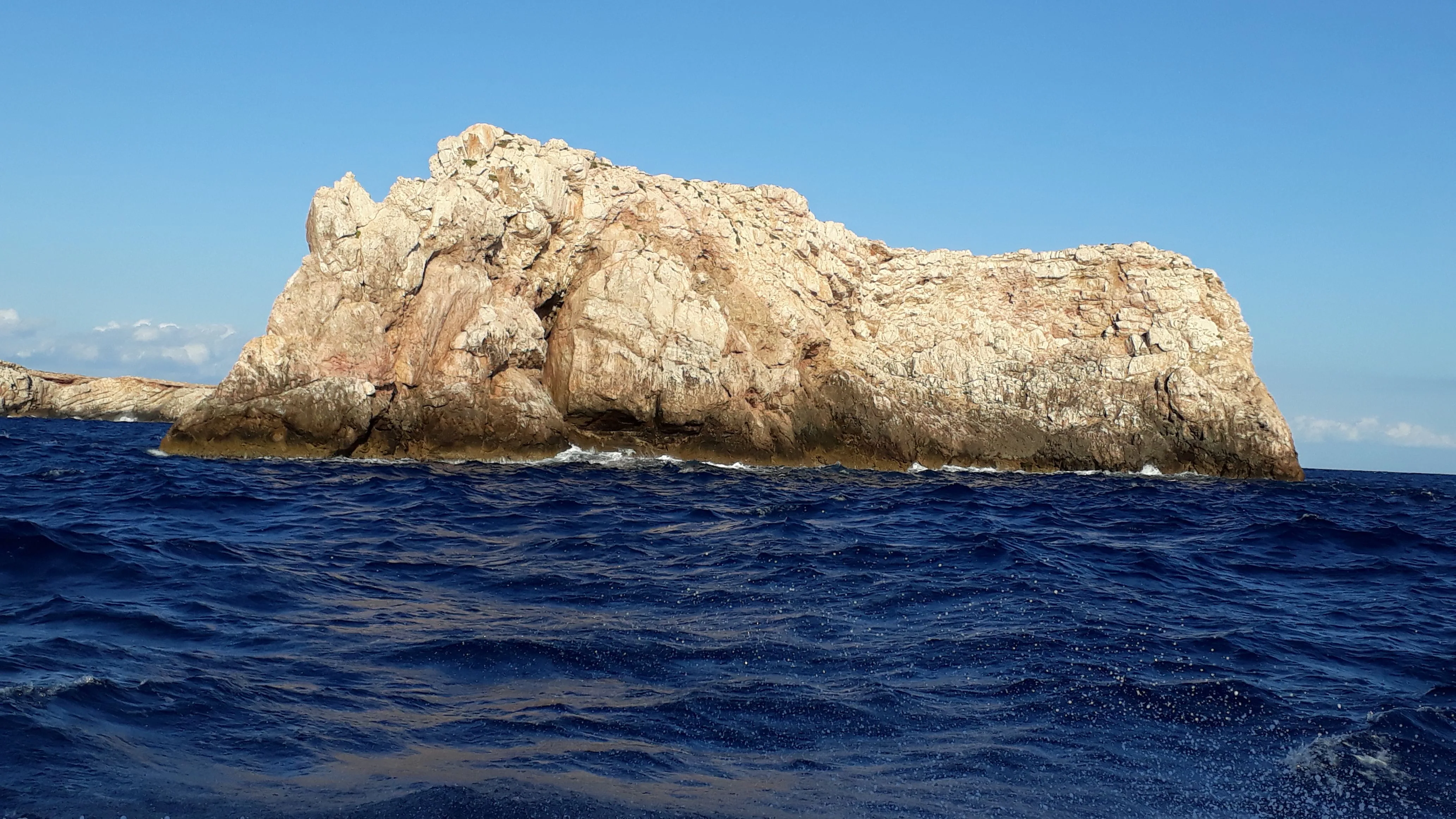
There are two main options:
Express tour (about 3 hours): The boat crosses to Cabrera, you swim at the Blue Grotto, snorkel in the protected waters, and you’re back in time for lunch. Good if your time is limited.
Classic tour (4+ hours): More time at the island, typically including a visit to the 14th-century castle and the museum (which tells the story of Napoleonic prisoners who were stranded here for years). Longer in the water too. This is the one we’d recommend if you can fit it in.
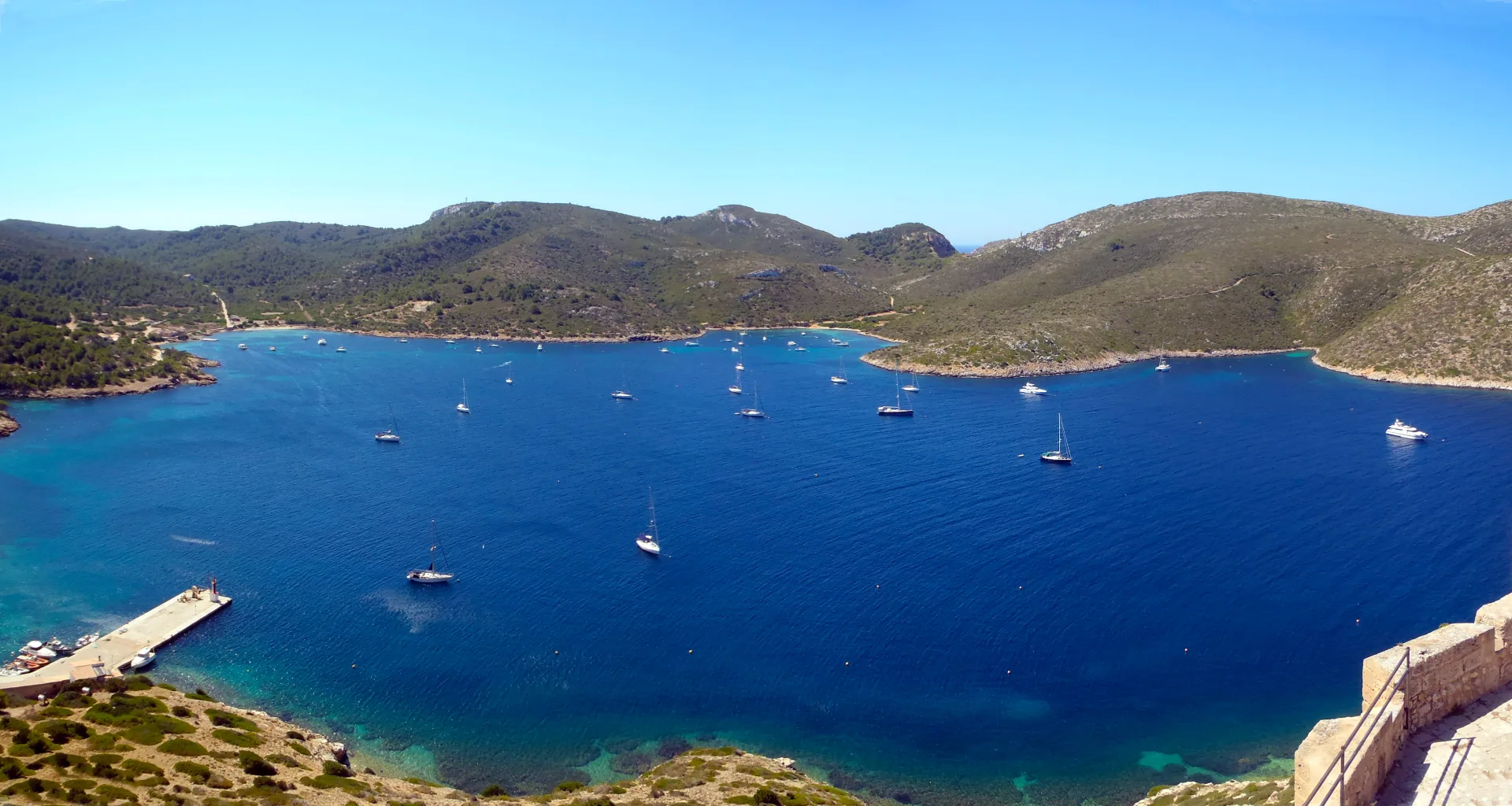
A few practical things worth knowing:
- Book in advance in July and August. Tours sell out, especially on weekends.
- Take sea sickness medication if you’re prone to it. The open water crossing can be choppy.
- The snorkeling around Cabrera is some of the best around Mallorca. Bring your own mask if you have one.
- Most operators offer free cancellation up to 24 hours before.
Prices are typically 35-45 EUR per adult. Main operators at the harbor are Excursions a Cabrera and Mar Cabrera.
The salt pans: pink water and flamingos
The Ses Salines salt pans sit at the south end of the lagoon, on Avinguda Primavera, about a 15-minute walk from the town center. They’ve been in use since the 4th century BC, making them among the oldest continuously active salt pans in the world, and they’re still harvested by hand today.
The color is what surprises most people. In summer, particularly from July through September, the water turns vivid shades of pink and orange. This comes from a salt-tolerant microorganism called Dunaliella salina, which produces a red pigment when salt concentrations are high. The peak harvest is in August, which is also when the colors are most intense.
Flamingos are regularly spotted in the wetlands adjacent to the salt pans, alongside a range of other wading birds. You don’t need to be a birdwatcher to appreciate it: a flock of flamingos feeding in pink water against the Mallorcan countryside is a fairly memorable scene.
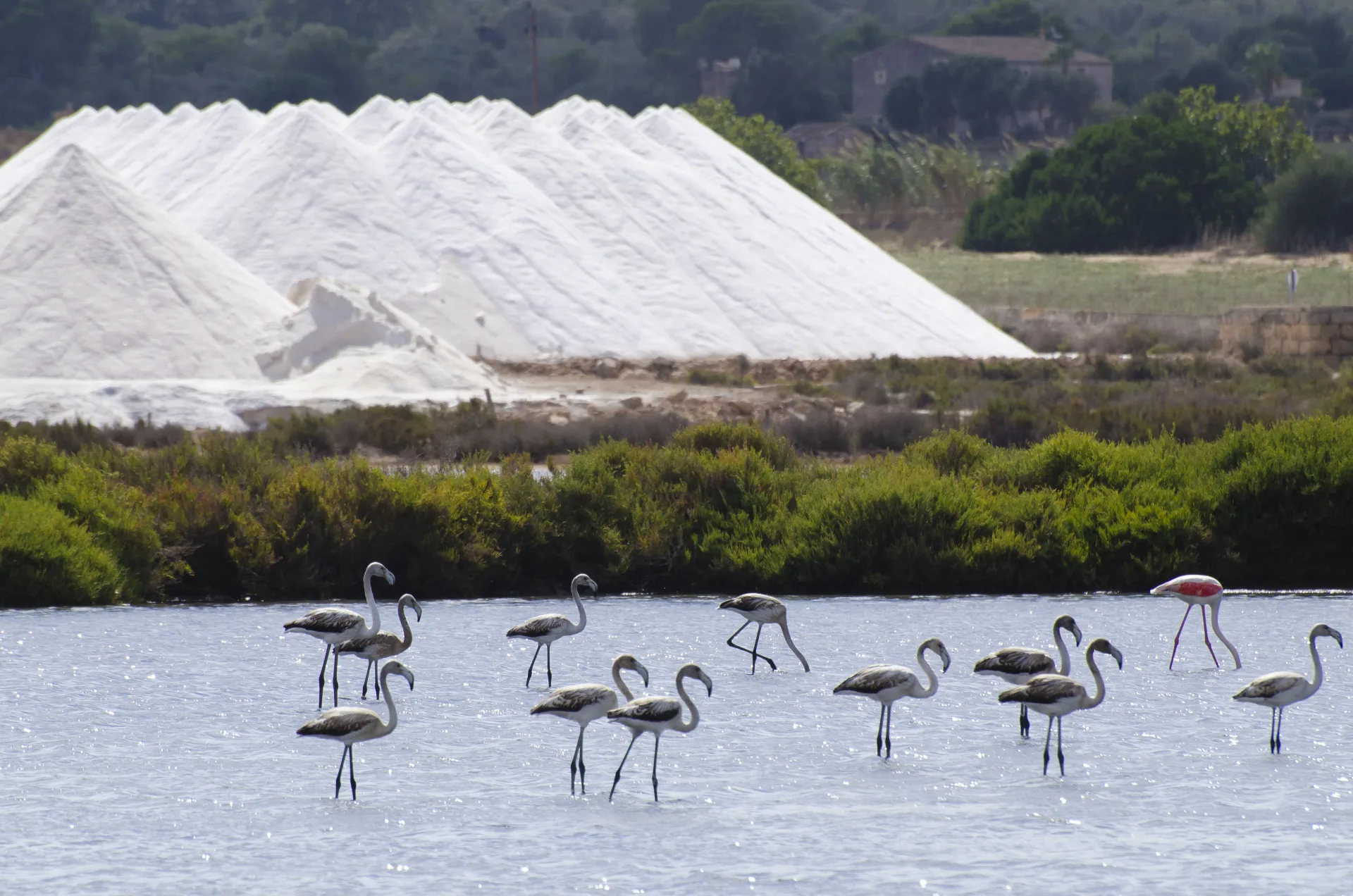
There’s no entrance fee. Walk along the footpath at the edge of the salt pans or view them from the road. Morning light is best for photos.
Things to do in Colonia de Sant Jordi
The Wednesday market
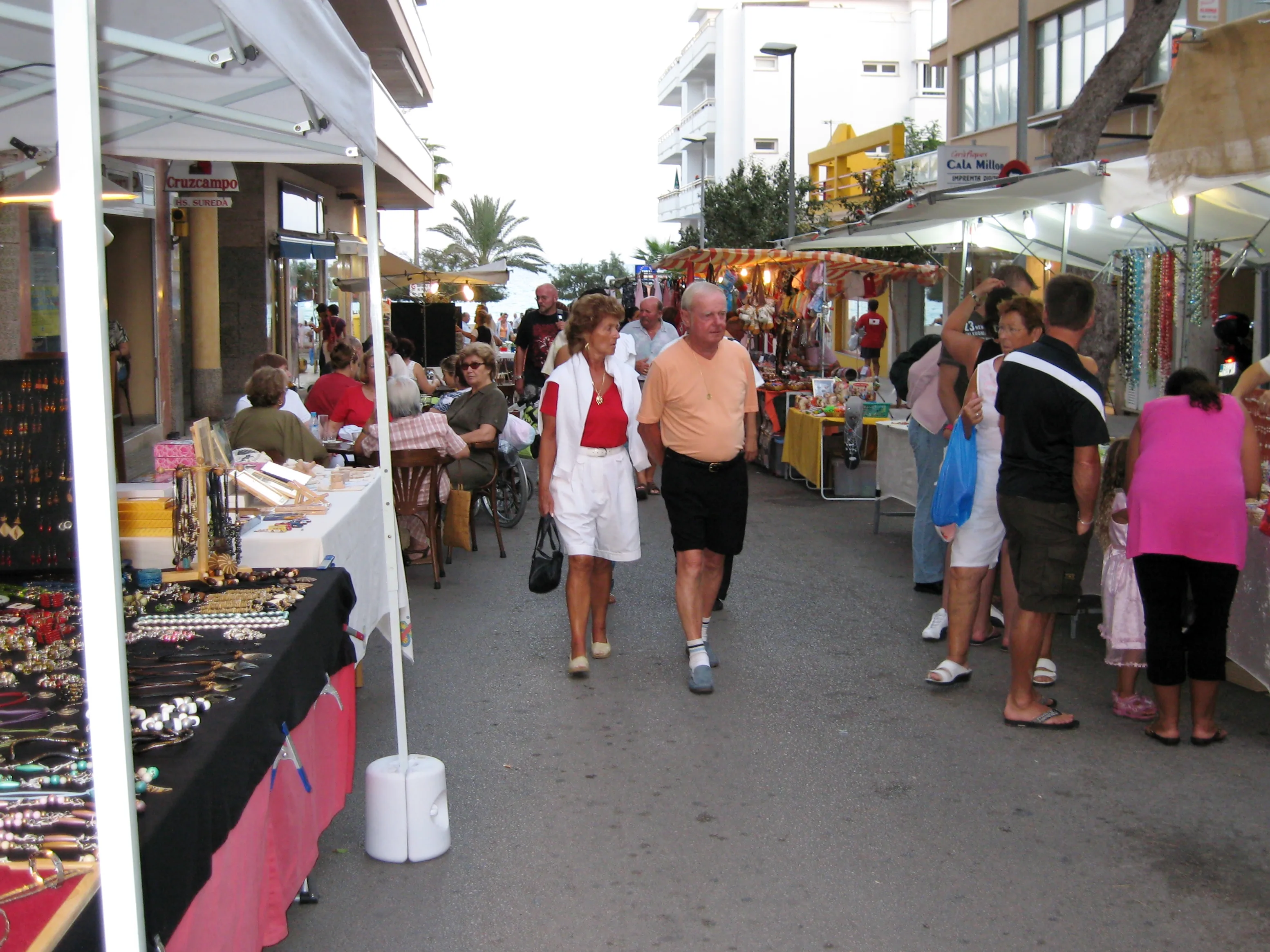
Every Wednesday from 16:00 to 20:00, a market sets up in the town center with local produce, artisan food, crafts, and clothing. It’s a good-natured local affair, not particularly tourist-focused, and worth timing your trip around if you’re here mid-week. Arrive at 16:00 for the best selection.
Snorkeling and diving
The waters around Colonia de Sant Jordi and Cabrera are among the clearest in Mallorca. Several dive operators work out of the marina and offer guided dives for all experience levels. The rocky edges around Es Caragol and Es Trenc are also good for independent snorkeling with your own mask.
Cycling
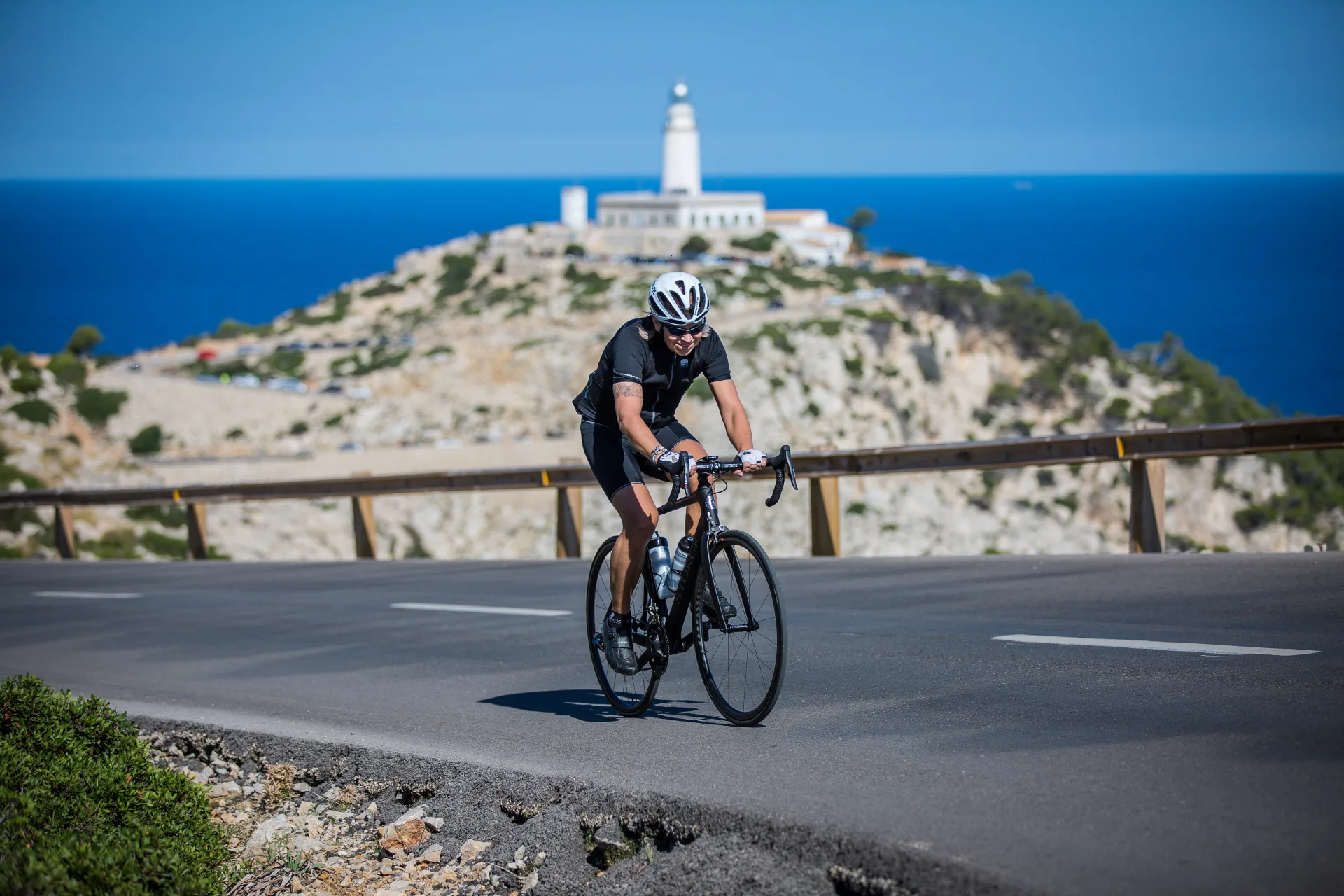
The countryside around Colonia de Sant Jordi is flat to gently rolling, with a decent network of cycling routes. Bikes are available to rent in town. Es Trenc is a 20-minute ride, and the salt pans loop is a good short option. The longer routes through Campos and into the interior are worth exploring if you have more time.
Best restaurants in Colonia de Sant Jordi
The restaurant scene here is better than the town’s size would suggest.
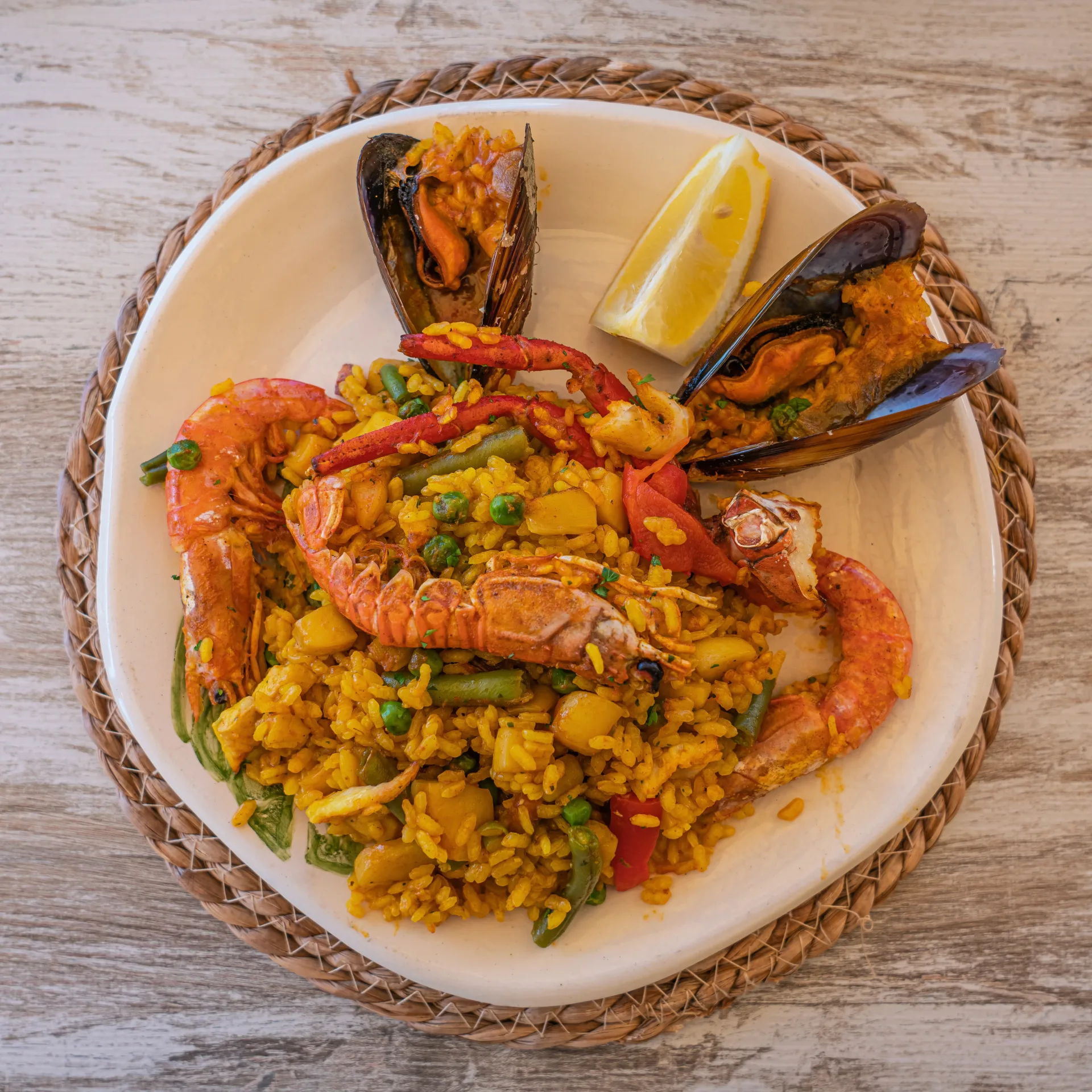
Port Blau is the institution. Open since 1965, it sits on the harbor and is known for its lobster stew (caldereta de langosta) and grilled monkfish. It’s not cheap, but it’s the real deal: a family-run place that has been doing the same things for 60 years and doing them well. Book ahead in summer.
CASSAI Beach House is the modern alternative: stylish space, good cocktails, international-leaning menu with strong Mediterranean influence. Popular with the younger crowd and gets busy on weekend evenings.
S’Arrosseria is the place for rice dishes and paella. Straightforward, honest cooking, good value compared to the harbor-front places.
Sal de Cocó does tapas and small plates, a solid option for lunch or a lighter dinner.
Salicornia is worth knowing about for more creative cooking using local and seasonal produce from the surrounding area.
For price context: expect to pay around 15-25 EUR per person at lunch (2 courses, drink included), and 30-55 EUR per person at dinner at the better restaurants.
Bars and nightlife in Colonia de Sant Jordi
Colonia de Sant Jordi doesn’t have nightlife in the Magaluf sense. There’s no club strip and no all-night venues. What there is: a handful of good bars along and near the harbor that stay open late in summer.
The harbor promenade is the main gathering point in the evening. Most bars here have outdoor tables, and the atmosphere on a warm summer night is exactly what you’d want: cold drinks, warm air, the smell of the sea.
Auba Cafe and 5 Illes EAT&DRINK are among the more popular spots for evening drinks. Strandkorb has a laid-back beach bar feel. None of these are rowdy, all of them stay open past midnight in high season.
If you want actual dancing, you’ll need to drive to Palma. That said, most visitors don’t come to Colonia de Sant Jordi looking for nightlife, and most would agree the evenings are better spent at a harbor table with a local wine.
Day trips from Colonia de Sant Jordi
Mondrago Nature Park
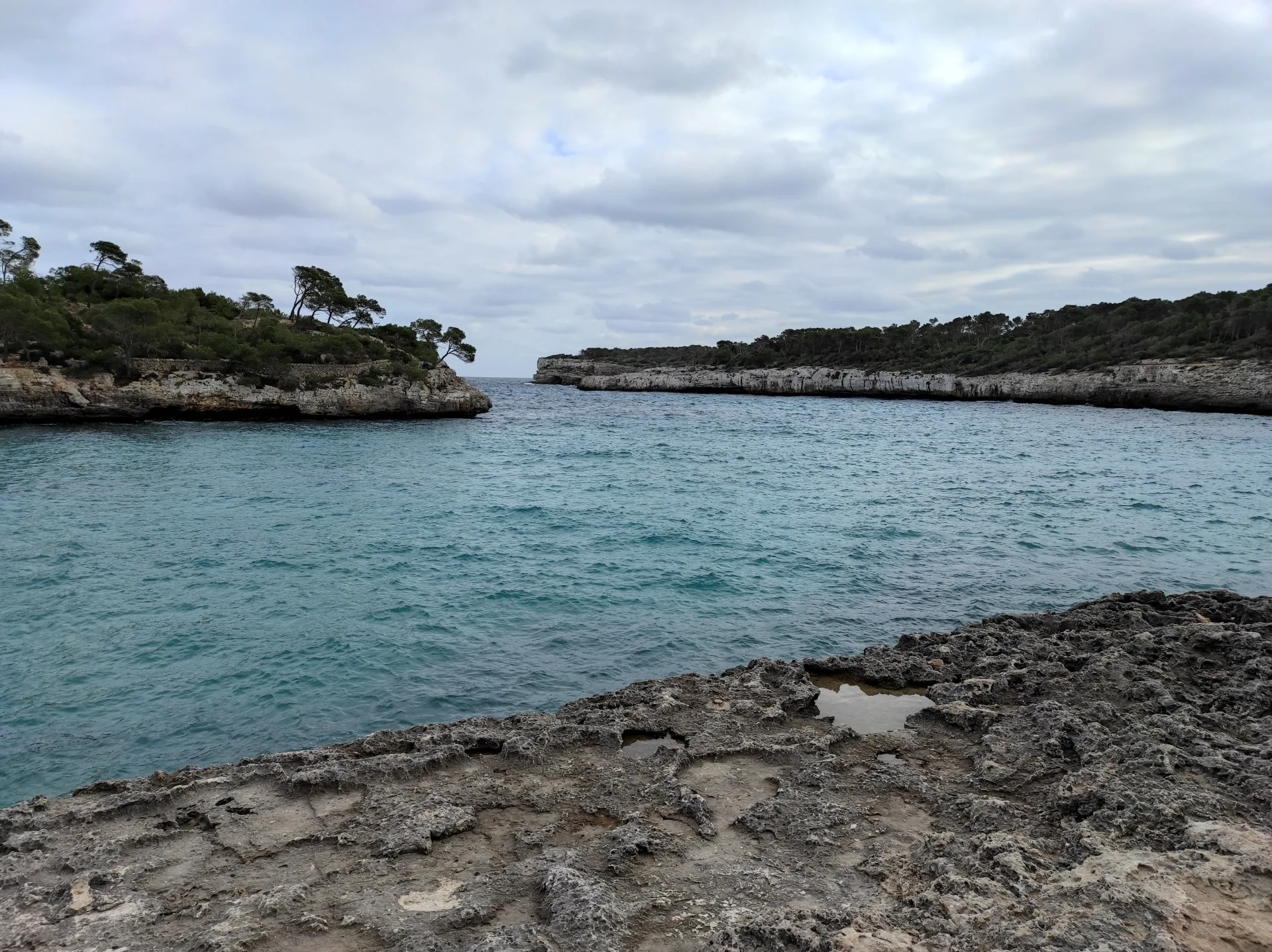
About 30 minutes east by car, Mondrago is a protected natural park with 750 hectares of coastal forest, wetlands, and some of the prettiest calas on this stretch of coastline. The main beaches, Cala Mondrago and Cala S’Amarador, have clear water and a natural setting that’s harder to find on the island than you’d think. Parking is paid but the park entrance is free. Go on a weekday in shoulder season and you’ll feel like you have it to yourself. You can also visit Cala Mondrago directly from the airport if you’re staying in the southeast.
Cala Figuera and Porto Petro
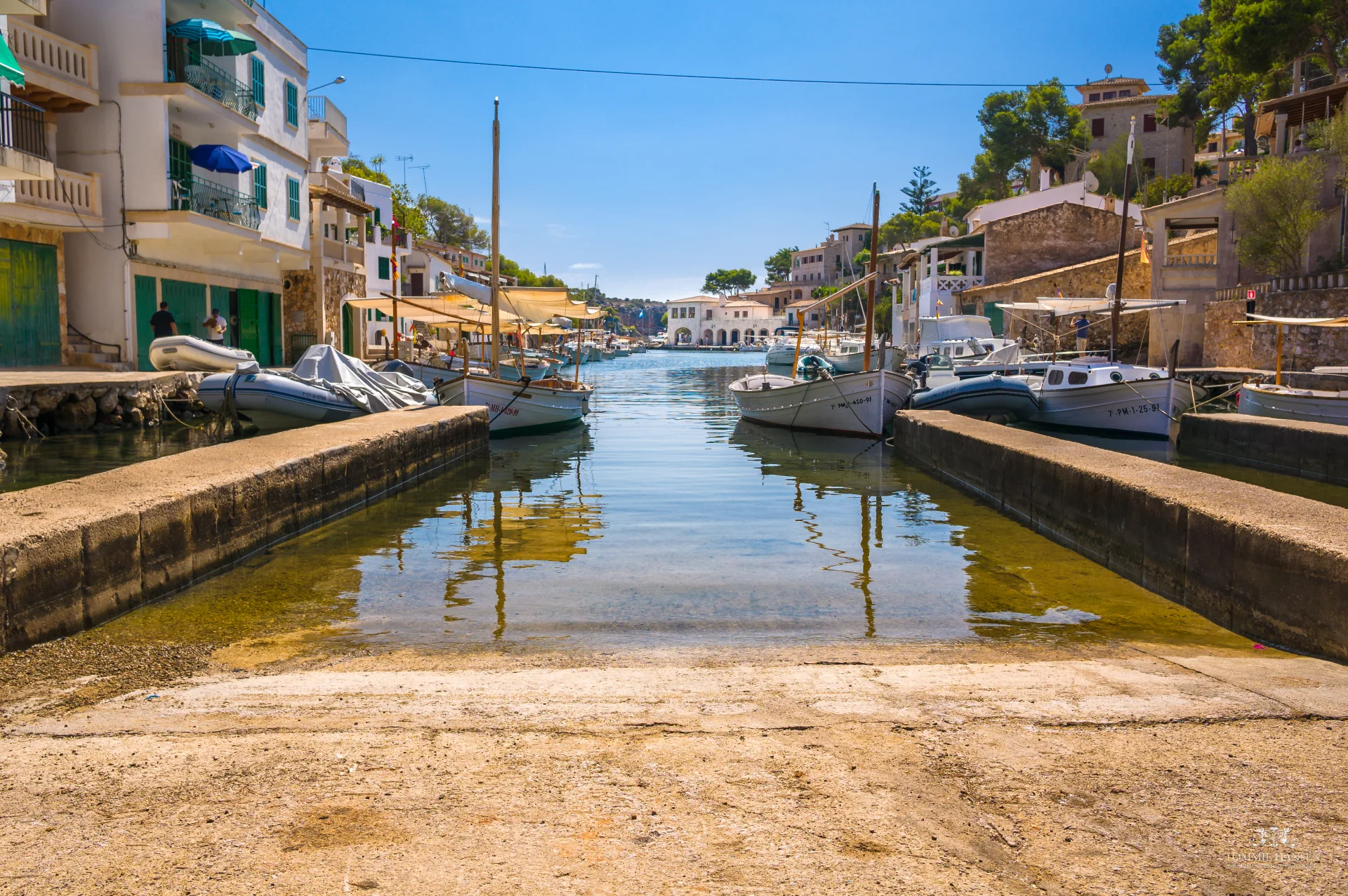
Two small fishing villages worth a drive for the scenery. Cala Figuera has one of the most photogenic harbors in Mallorca: whitewashed houses right on the water, fishing boats, no beach. Porto Petro is quieter, with a small marina and a handful of restaurants. Both are around 20 minutes from Colonia de Sant Jordi and make for a good half-day out.
Santanyi market
On Saturday mornings, the market in Santanyi (about 15 minutes inland) is one of the better local markets in southern Mallorca, with food, crafts, and clothing spread around the main square and surrounding streets. More local shoppers than tourists, which is always a good sign.
Weather in Colonia de Sant Jordi: the best time to visit
The south coast of Mallorca gets more sun and less rain than the north, and Colonia de Sant Jordi sits on an exposed stretch of coast that catches the breeze. Here’s what to expect by season:
April to June: Our preferred window. Temperatures sit between 18-26°C, the sea is warming up, the beaches are not crowded, and accommodation prices haven’t peaked yet. The salt pans start showing color from around late June.
July and August: Hot (up to 31°C in the afternoons), the sea reaches 26°C, and the town fills up. Beaches are busy by mid-morning. The pink water in the salt pans is at its best. Book everything in advance.
September and October: The best-kept secret months. Temperatures drop to a comfortable 22-26°C, the sea is still warm, crowds thin out, and prices fall. Some restaurants stay open into October; others close after the first week. September rainfall increases compared to summer, but it rarely affects full days.
November to March: Quiet. Most tourist-facing businesses close or cut hours significantly. The town returns to its off-season pace. Not for everyone, but if you want Mallorca without the summer machine, this is when the locals have it back.
Practical tips for Colonia de Sant Jordi
Parking: The town center is walkable but you’ll want a car for the beaches. Free street parking is available around the harbor and residential streets. For Es Trenc in summer, parking fills up early and costs around 10 EUR per day, so arrive before 9:00 or use the shuttle from Campos.
Getting around locally: Bikes are the best option for getting between town and the nearby beaches and salt pans. Several rental shops operate in town.
What to bring to the beaches: Sunscreen, plenty of water, and snorkeling gear if you have it. The water at Es Caragol and around Cabrera is clear enough to make snorkeling genuinely worthwhile. For Es Carbó and Es Caragol, bring everything you need as there are no facilities at all.
Book Cabrera in advance: Especially in July and August, boat tours to Cabrera sell out. Book at least a couple of days ahead, ideally more on weekends.
Language: The town is bilingual Mallorcan/Spanish. German is widely spoken in high season. English is understood in most restaurants and hotels.
Going straight to Colonia de Sant Jordi?
A private transfer takes about 45 minutes from Palma Airport and drops you at your accommodation.
Check your transfer price