Cala d'Or: The Complete Guide to Mallorca's Golden Bay
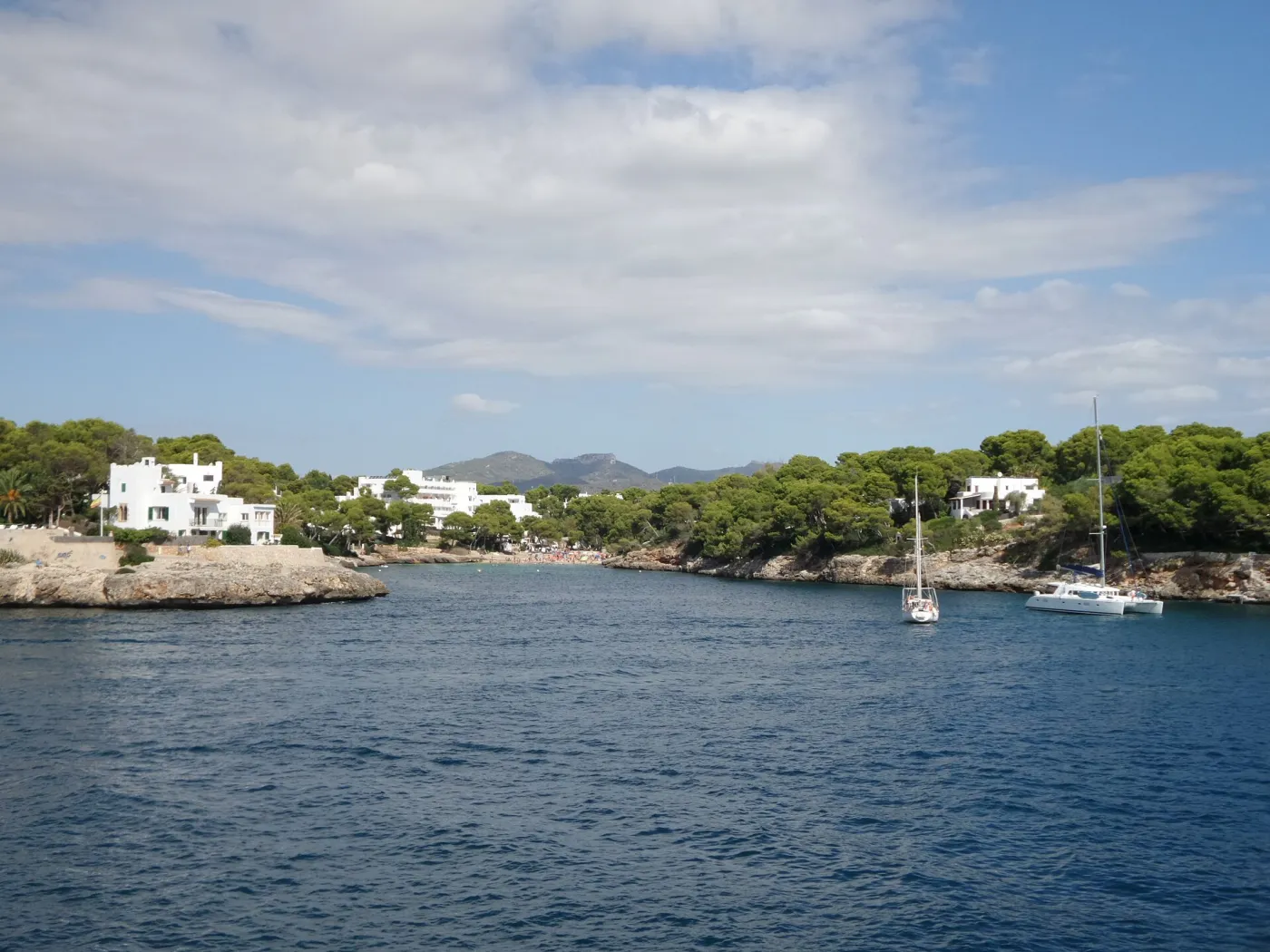
Cala d’Or is one of those places in Mallorca that keeps people coming back year after year. With five sheltered coves, a pretty marina, whitewashed streets, and a surprisingly good restaurant scene, it strikes a balance between lively and relaxed that few resorts on the island manage. This guide covers everything you need to plan your trip.
What is Cala d’Or? A brief history
The name means “Golden Bay,” but the story behind it is more interesting than that. In 1932, an Ibizan artist and architect named Josep Costa Ferrer discovered this stretch of coastline and decided to build a small resort inspired by the whitewashed villages of Ibiza. He renamed the area from its original name, Cala d’Hort, to Cala d’Or, and set strict building rules: low-rise, white facades, flat roofs, no buildings taller than the pine trees.
That Ibicencan style still defines Cala d’Or today. Walk through the pedestrian center and you’ll notice the white walls, the bougainvillea, the low buildings tucked between Mediterranean pines. It feels different from the high-rise resorts you find in other parts of Mallorca, and that’s entirely by design.
By the 1970s, yachts started filling the marina and the town grew into one of the east coast’s most popular destinations. But it never lost that original character. It’s busy in summer, sure, but it’s never felt like Magaluf.
How to get to Cala d’Or from Palma Airport
Cala d’Or is about 60 km from Palma Airport, on Mallorca’s southeast coast. The drive takes around 55 minutes via the Ma-19 motorway heading east through Campos.
Private transfer is the most comfortable option, especially if you’re arriving with luggage, kids, or after a long flight. A private transfer from the airport to Cala d’Or with Janer Bus costs from 90 EUR for up to 4 passengers. The driver meets you at arrivals, and you’re at your hotel in under an hour with no detours.
{{cta}}
Public bus is possible but not straightforward. The TIB route 501 goes from the airport to Palma’s bus station, where you’d transfer to route 515 heading toward Cala d’Or via Campos and Felanitx. The total journey takes around 1 hour 45 minutes with the connection, and buses don’t run late at night.
Car rental makes sense if you plan to explore beyond Cala d’Or. The east coast has dozens of beaches and villages worth visiting, and a car gives you the freedom to reach them. Rental desks are in the airport arrivals hall.
The best beaches in Cala d’Or
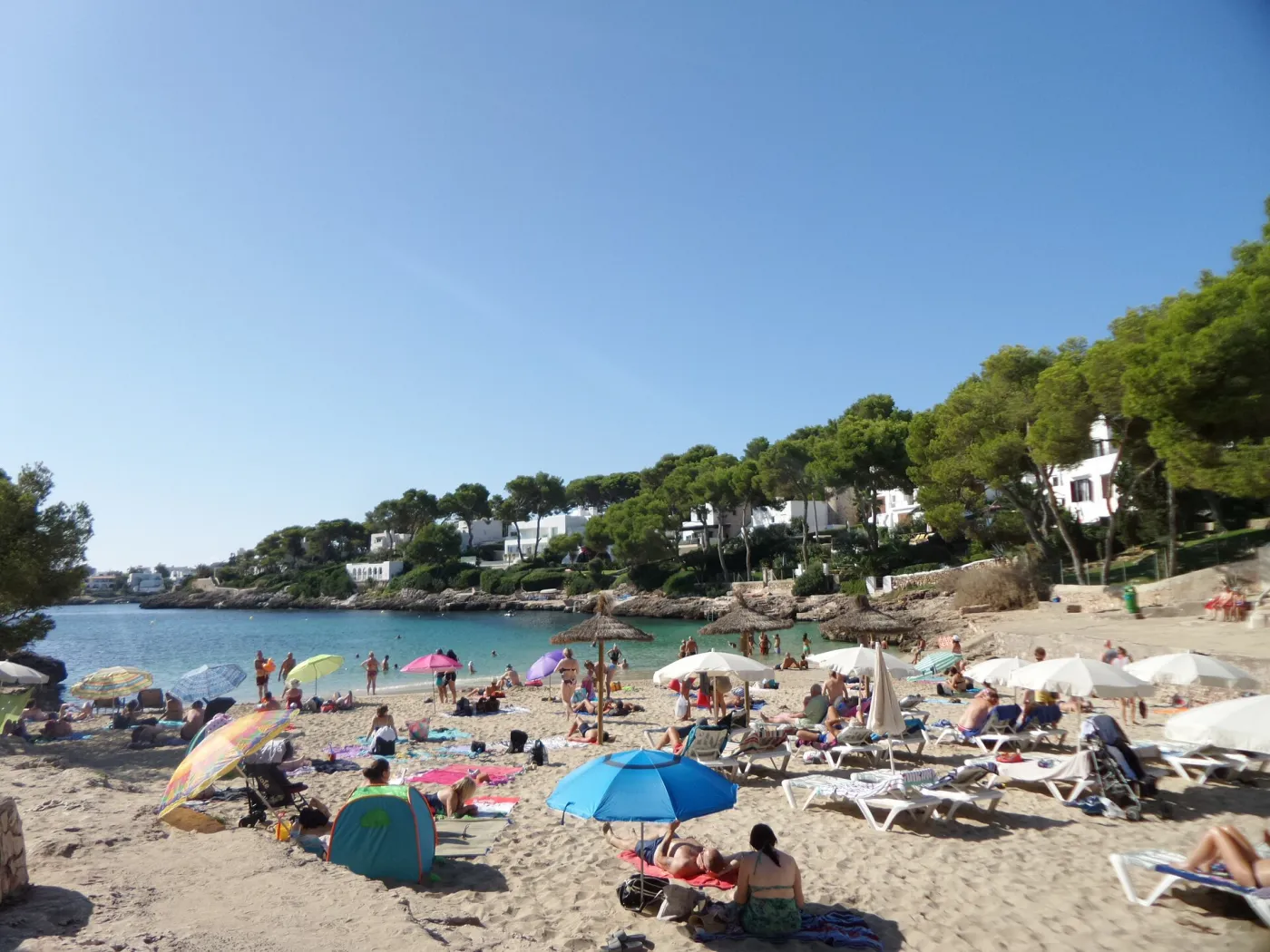
This is what draws most people to Cala d’Or: a series of small, sheltered coves (calas) carved into the rocky coastline, each with its own personality. The water in all of them is that transparent turquoise you see in the photos. It really does look like that.
Cala Gran
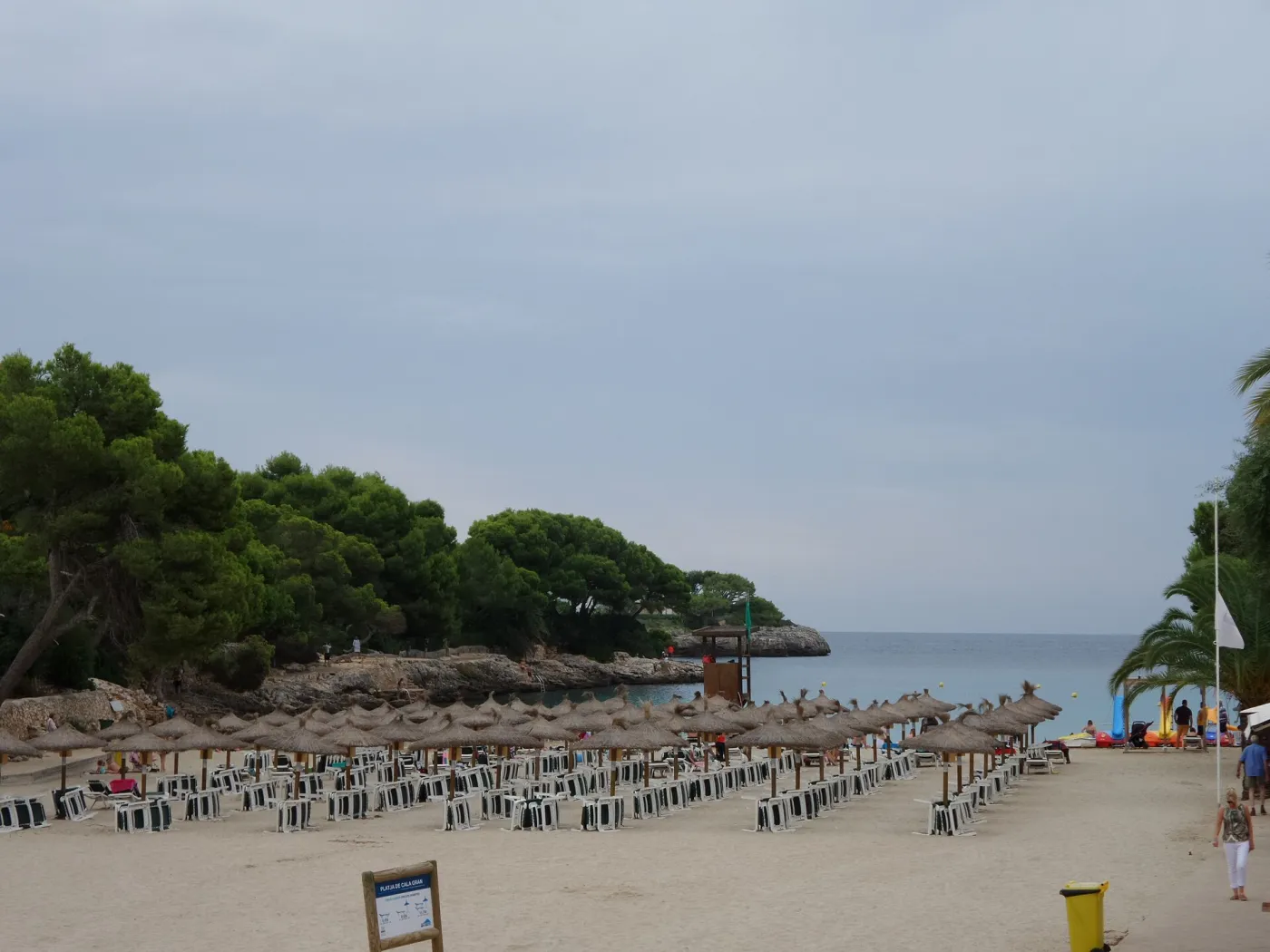
The largest and most popular beach in Cala d’Or, about 40 meters wide and 100 meters deep. It has sun lounger rental, a lifeguard, a beach bar, and a small play area for kids. The water is calm and shallow near the shore, which makes it great for families. Pine trees line the cliffs on both sides, so there’s natural shade if you arrive early enough to grab a spot near the edges. It gets busy in July and August, so mornings before 10:00 are your best bet.
Cala Esmeralda
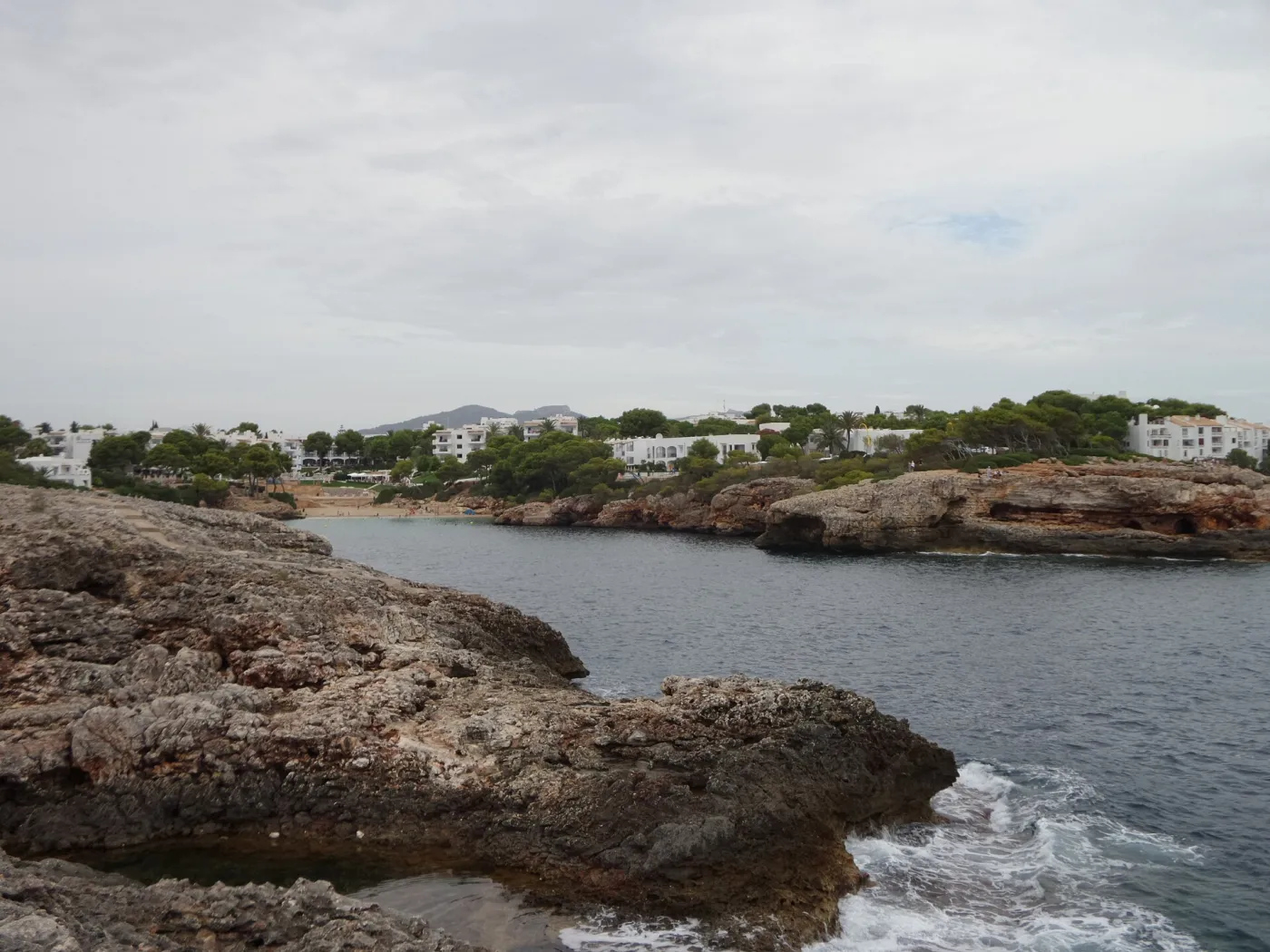
Our personal favorite. Cala Esmeralda is tiny (only about 25 meters wide) and completely surrounded by cliffs and pine trees, which gives it a secluded, almost hidden feeling. The water here is possibly the clearest in all of Cala d’Or, living up to the “emerald” name. There’s a beach bar at the top of the steps and sun lounger rental, but limited space means it fills up fast. If you want this beach to yourself, arrive before 9:30 in high season.
Cala Serena
The northernmost cove in Cala d’Or, and one of the quietest. Unlike Cala Ferrera, which is just 300 meters away, there are no bars, hotels or shops surrounding it, which makes it a lot prettier and more natural. The water is excellent for snorkeling thanks to the rocky edges, and it’s popular with divers. If you want a quieter beach day with fewer tourists, this is the one.
Cala Ferrera
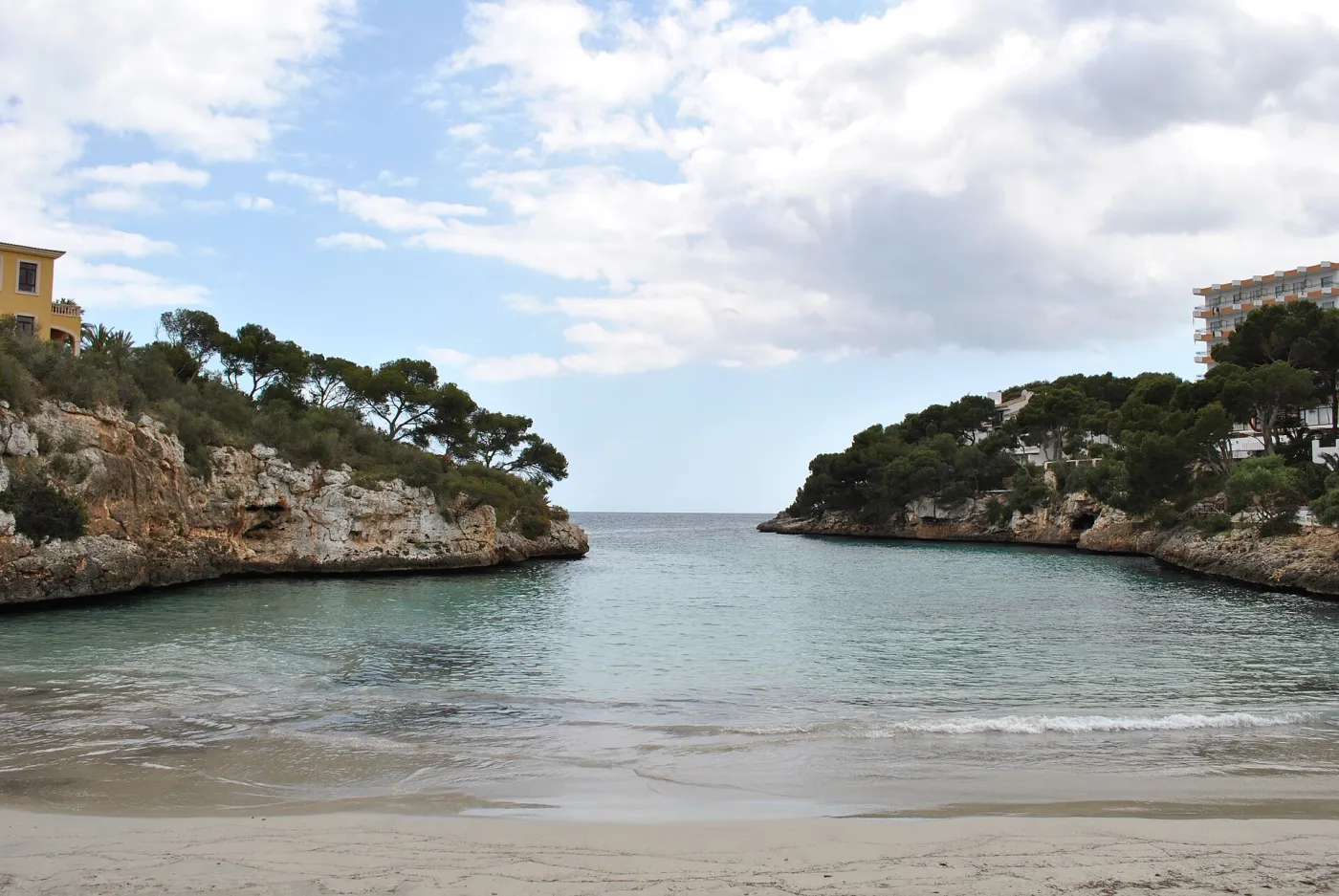
The most family-friendly beach in the area. It’s wide, has very shallow water that warms up quickly, and there’s a lifeguard on duty throughout summer. The beach is lined with hotels and restaurants, so you’ll never be far from food or drinks. It’s not the prettiest cove on this list, but it’s the most practical if you’re traveling with young children.
Cala Petita
A tiny, rocky cove that most tourists walk right past. There’s no sand to speak of, just flat rocks for laying your towel, and no facilities at all. But the water is crystal clear and it rarely has more than a handful of people. If you want a quiet swim away from the crowds, this is your spot. It’s a short walk from Cala Gran.
Cala Sa Nau
Technically not in Cala d’Or (it’s about 4 km north), but too beautiful to leave off the list. Cala Sa Nau is a 50-meter-wide cove with soft sand, turquoise water, and dramatic cliff walls. There’s a small chiringuito serving drinks and snacks. Parking costs around 5 EUR per day in summer and fills up by mid-morning. Worth the early start.
Quick beach comparison
| Beach | Size | Facilities | Crowd level | Best for |
|---|---|---|---|---|
| Cala Gran | Large | Full (loungers, bar, lifeguard) | High | Families, all-day beach |
| Cala Esmeralda | Small | Loungers, bar | Medium-high | Couples, snorkeling |
| Cala Serena | Medium | Minimal | Low-medium | Quiet day, diving |
| Cala Ferrera | Large | Full (loungers, bars, lifeguard) | High | Young families |
| Cala Petita | Tiny | None | Low | Solitude, swimming |
| Cala Sa Nau | Medium | Basic (chiringuito) | Medium | Photography, swimming |
Things to do in Cala d’Or
Explore the marina
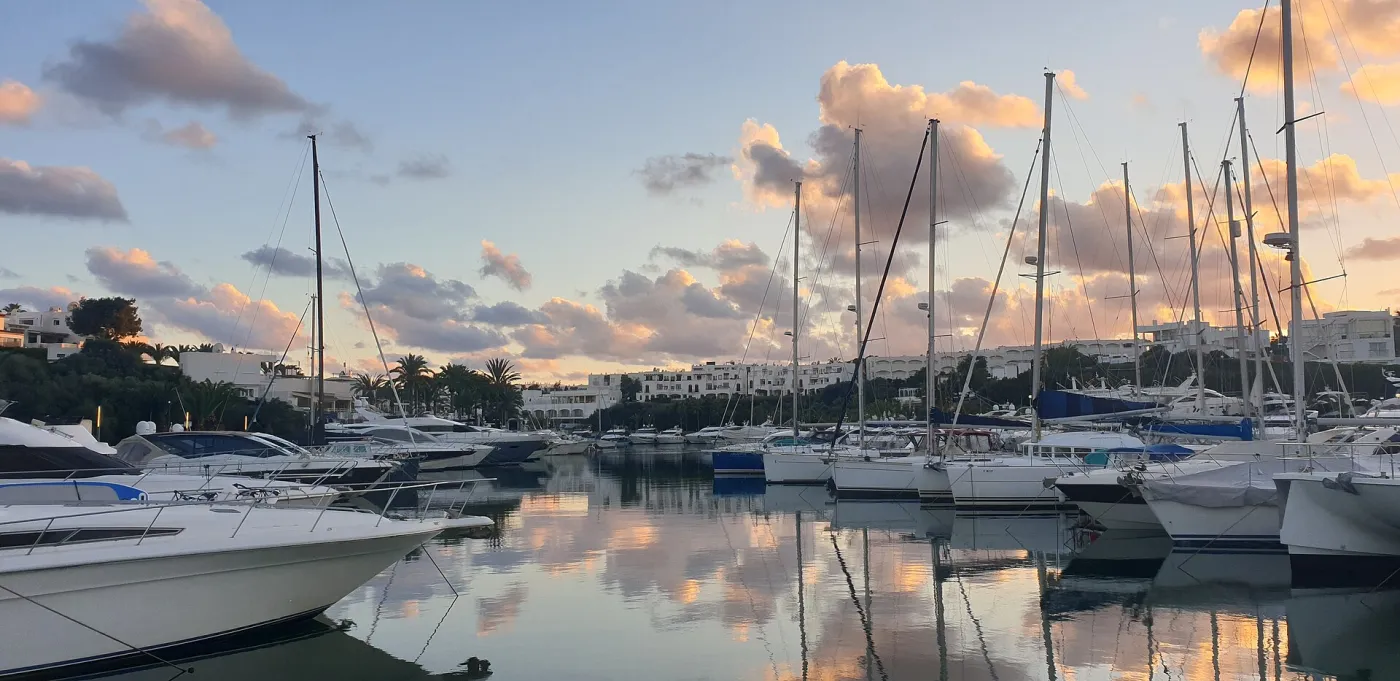
Cala d’Or’s marina is one of the prettiest on the island. It’s a natural inlet lined with restaurants, bars, and moored yachts. Walk along the promenade in the evening when the boats are lit up and the restaurants start filling their terraces. It’s a nice way to end a beach day.
Boat trips
Several operators run boat trips from the marina. You can do half-day catamaran cruises along the coast (stopping at beaches you can’t reach by land), full-day sailing trips, or shorter glass-bottom boat excursions. Prices start from around 40 EUR for adults on a shared catamaran. If you want something more private, small motorboat rentals (no license needed for boats under 15hp) start from around 50 EUR per hour.
Water sports
The calm, sheltered water in the calas is ideal for kayaking, stand-up paddleboarding, and snorkeling. You can rent kayaks on Cala Gran and Cala Ferrera. Guided kayak tours along the coastline cost around 35-45 EUR per person and typically last 2-3 hours, stopping at caves and hidden coves. The rocky edges of Cala Serena and Cala Esmeralda are particularly good for snorkeling.
Walk the old town
The pedestrian center of Cala d’Or is genuinely pleasant to walk around. The whitewashed buildings, narrow lanes, and flowering balconies give it character that most Mallorcan resorts lack. There are enough shops, ice cream places, and cafes to fill an afternoon without it feeling like a tourist trap.
Weekly markets
The main market runs on Saturday mornings in the town center with fresh produce, local crafts, leather goods, and souvenirs. There’s also a smaller evening market on Sundays from May to October in the Placa de Toni Costa area (18:00 to 23:00), which is more relaxed and has live music. On Thursdays, the nearby Cala Egos has its own evening market.
Cala d’Or Jazz Festival
Every May, the town hosts a free jazz festival that’s been running since 1994. Concerts take place in the open air around the marina and town center. It’s a great atmosphere and worth planning your trip around if you’re into live music.
Best day trips from Cala d’Or
One of the advantages of Cala d’Or’s location is easy access to some of the best spots on Mallorca’s east coast.
Mondrago Natural Park
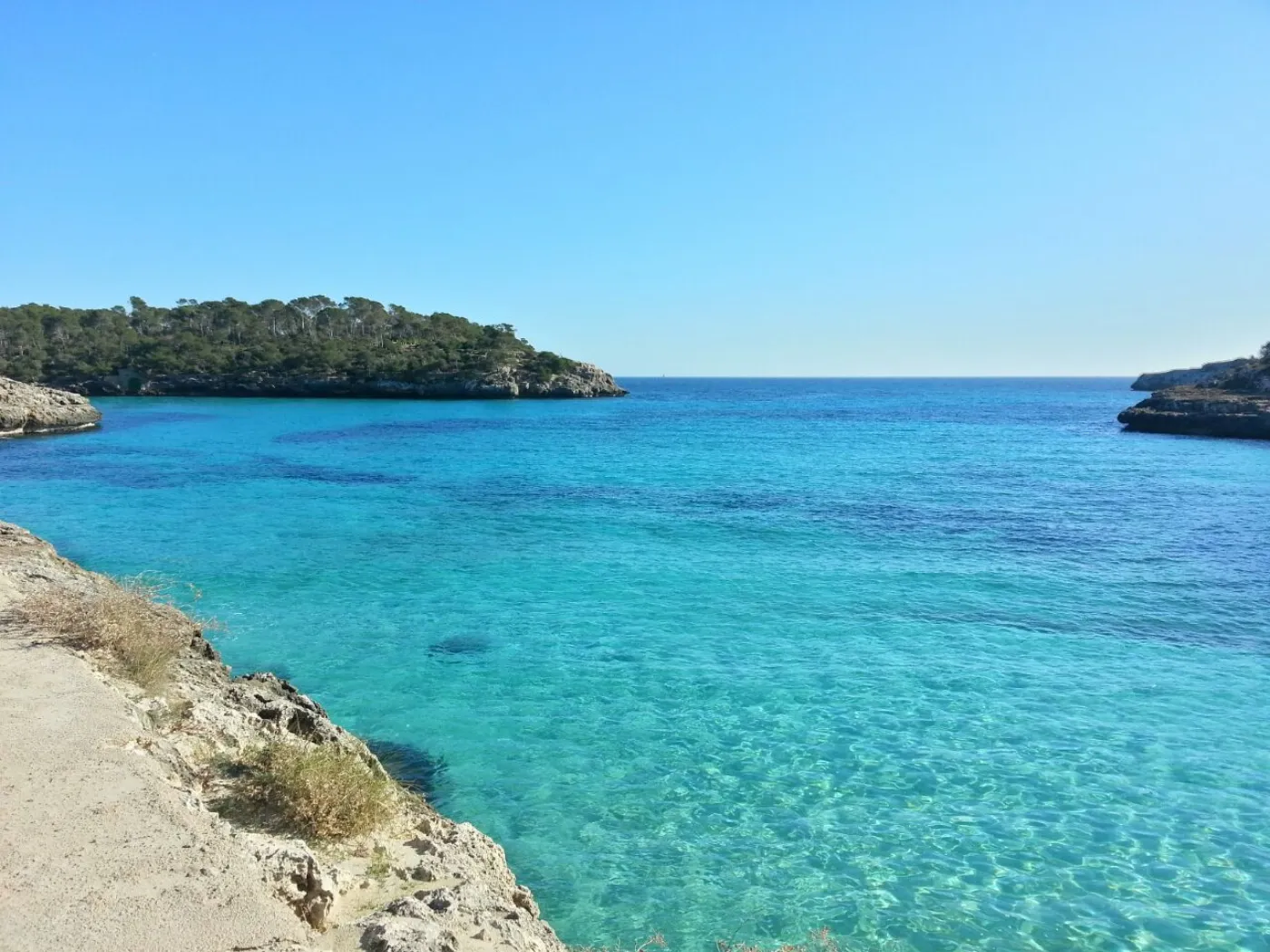
Only 6 km south (10 minutes by car), Mondrago is a protected natural park with two stunning beaches, S’Amarador and Cala Mondrago, connected by easy walking trails. Entry to the park is free. There are 5 marked hiking trails ranging from 20 minutes to over an hour. The beaches here are among the best in Mallorca, with fine white sand and shallow water. Pack a picnic. There’s a basic restaurant near S’Amarador but bringing your own food gives you more flexibility.
Calo des Moro
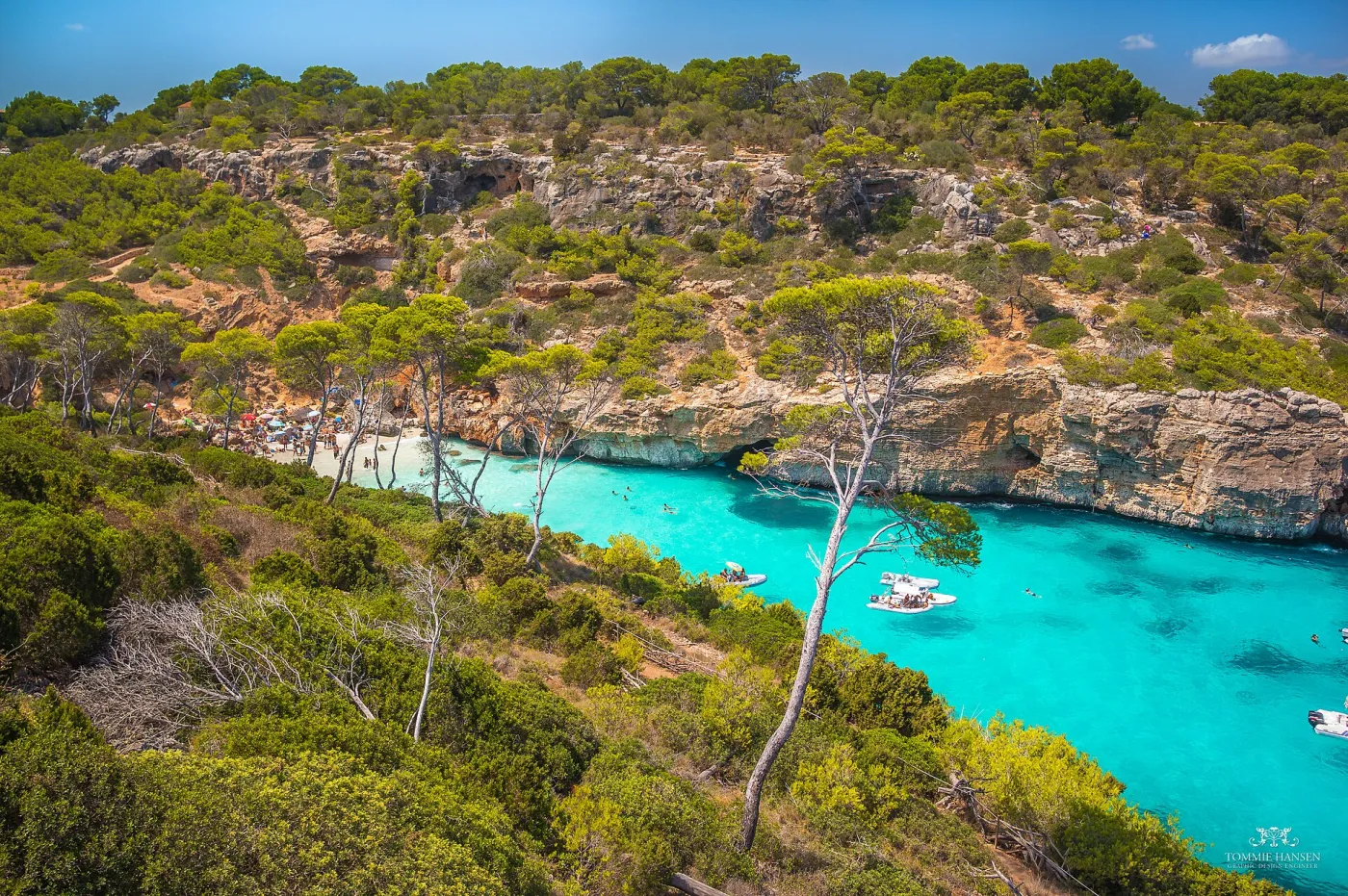
About 20 km south (25 minutes by car), near Santanyi. This tiny cove has been called one of the most beautiful beaches in Mallorca, and the photos don’t lie. The catch: it’s very small and gets extremely crowded by mid-morning in summer. If you go, arrive before 9:00 or plan for a late afternoon visit when people start leaving. There’s no parking lot, just roadside spots, and the walk down takes about 10 minutes.
Drach Caves (Porto Cristo)
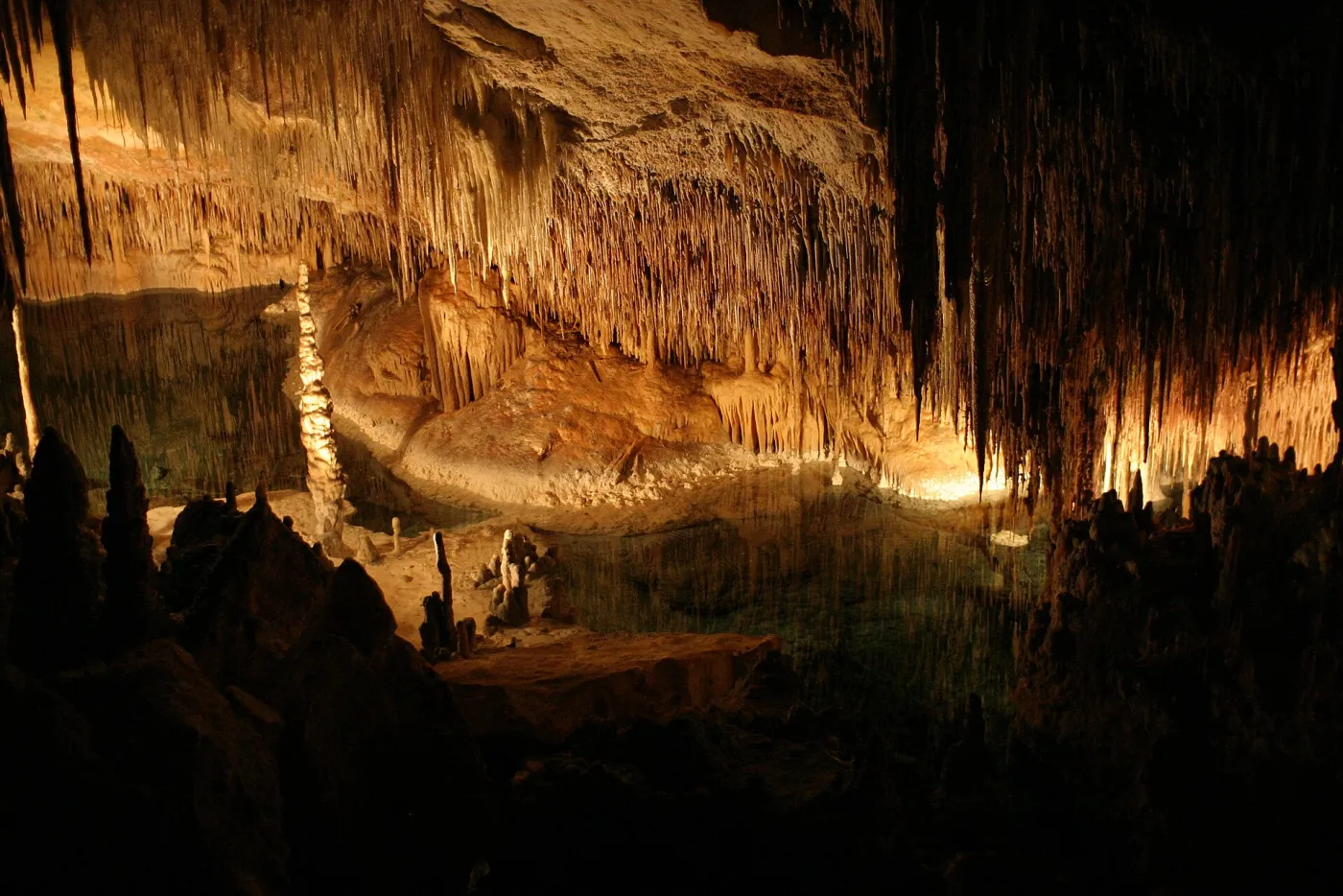
25 km north (30 minutes by car). These massive underground caves feature one of the largest underground lakes in the world, Lake Martel, where musicians perform a short classical concert from boats during the tour. It’s touristy, yes, but genuinely impressive. Tours run daily, last about an hour, and cost around 16 EUR for adults. Book ahead in summer.
Santueri Castle
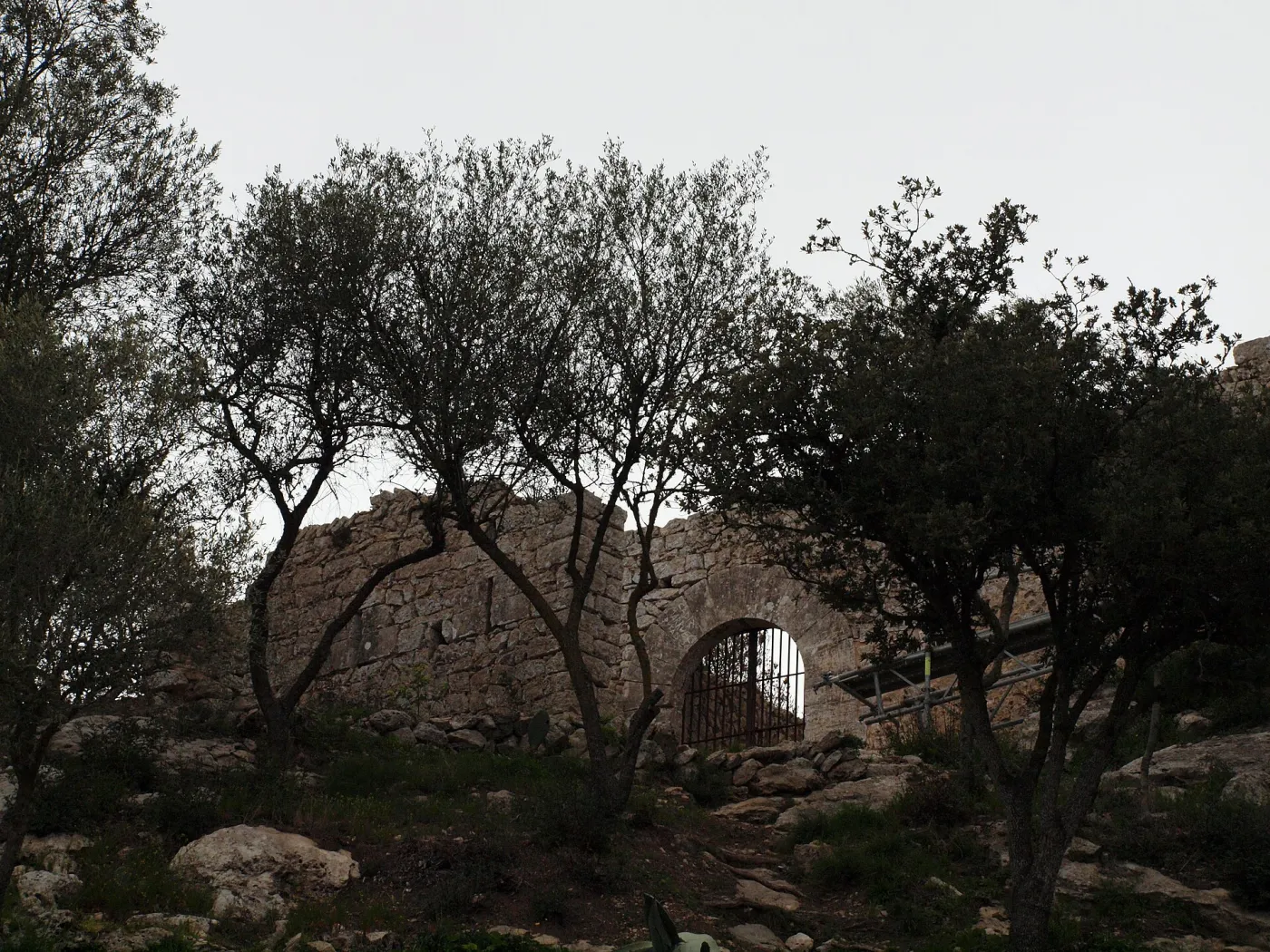
About 15 km northwest, perched at 475 meters above sea level near Felanitx. The ruins of this 14th-century castle sit on foundations that date back to Roman times. The drive up is scenic and the panoramic views from the top cover most of southeast Mallorca. Entry is around 4 EUR.
Santanyi
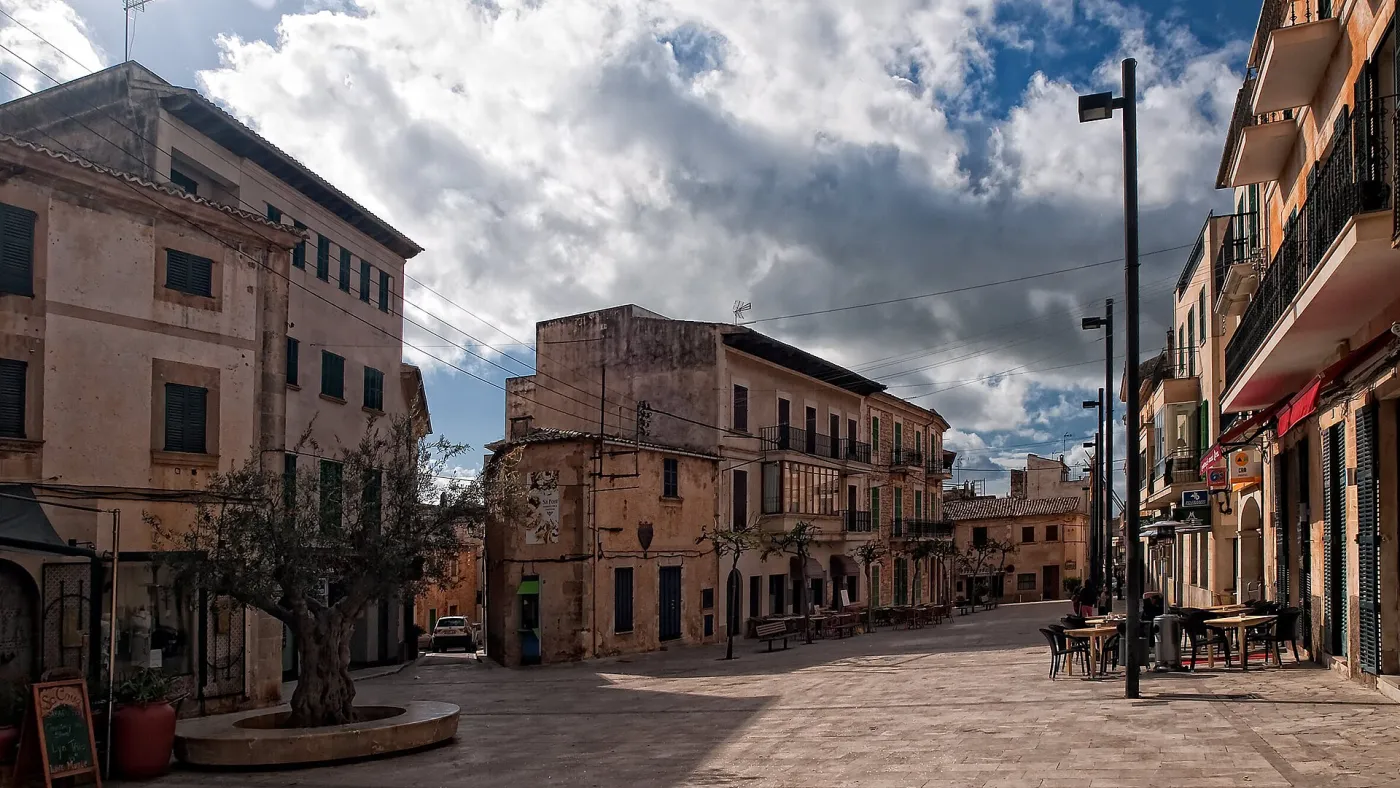
A proper Mallorcan town 12 km south, known for its honey-colored sandstone buildings and its excellent Saturday morning market (one of the best on the island). The main square has good cafes, and the town has a growing gallery scene. It’s a nice half-day trip, especially on market day.
Portopetro
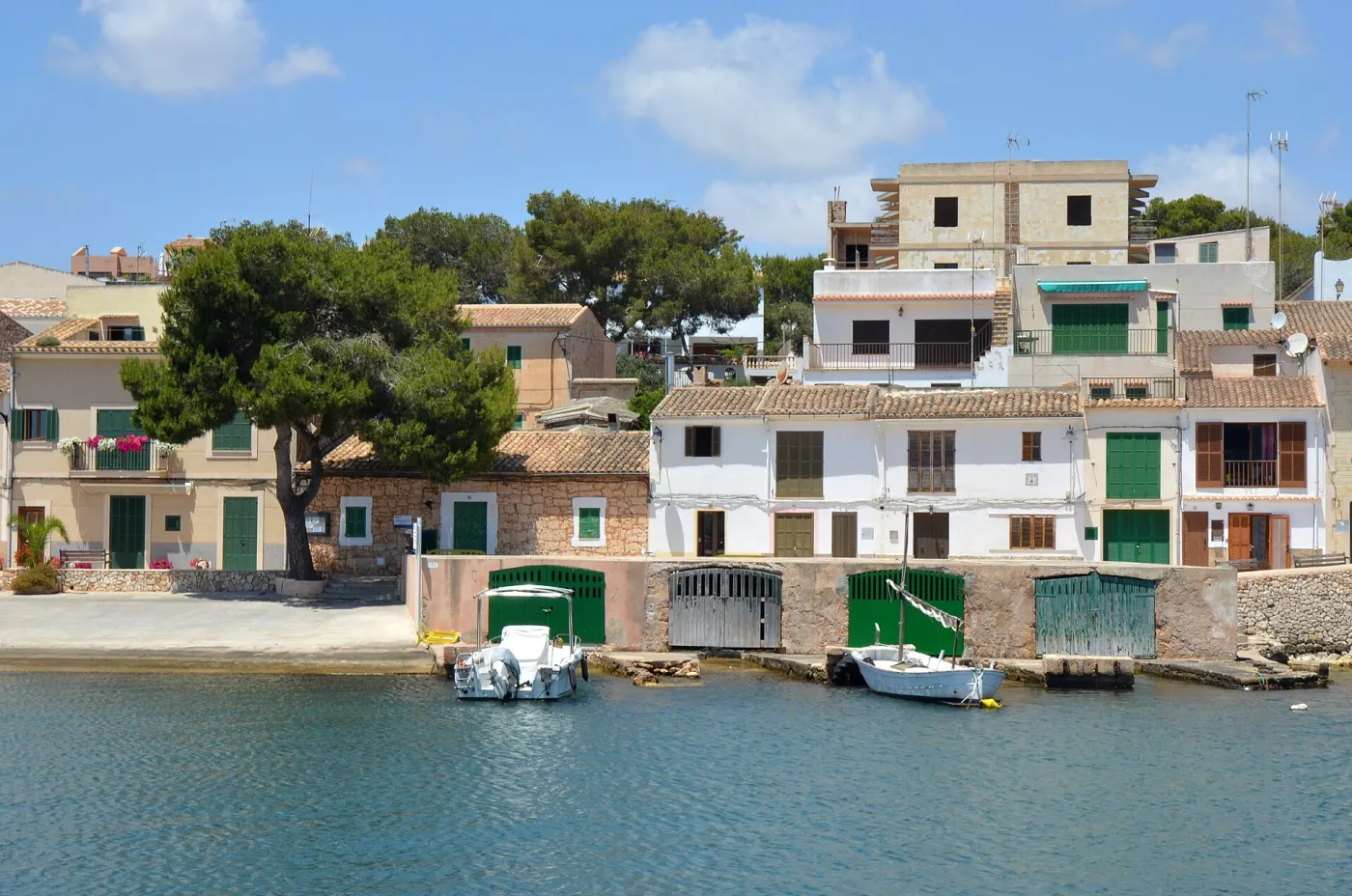
A quiet fishing village just 4 km south of Cala d’Or. No big resorts, no tourist crowds, just a small harbor with a handful of restaurants and cafes. It’s the place to go for a calm lunch by the water. Try the seafood at one of the waterfront spots.
{{cta}}
Where to eat in Cala d’Or
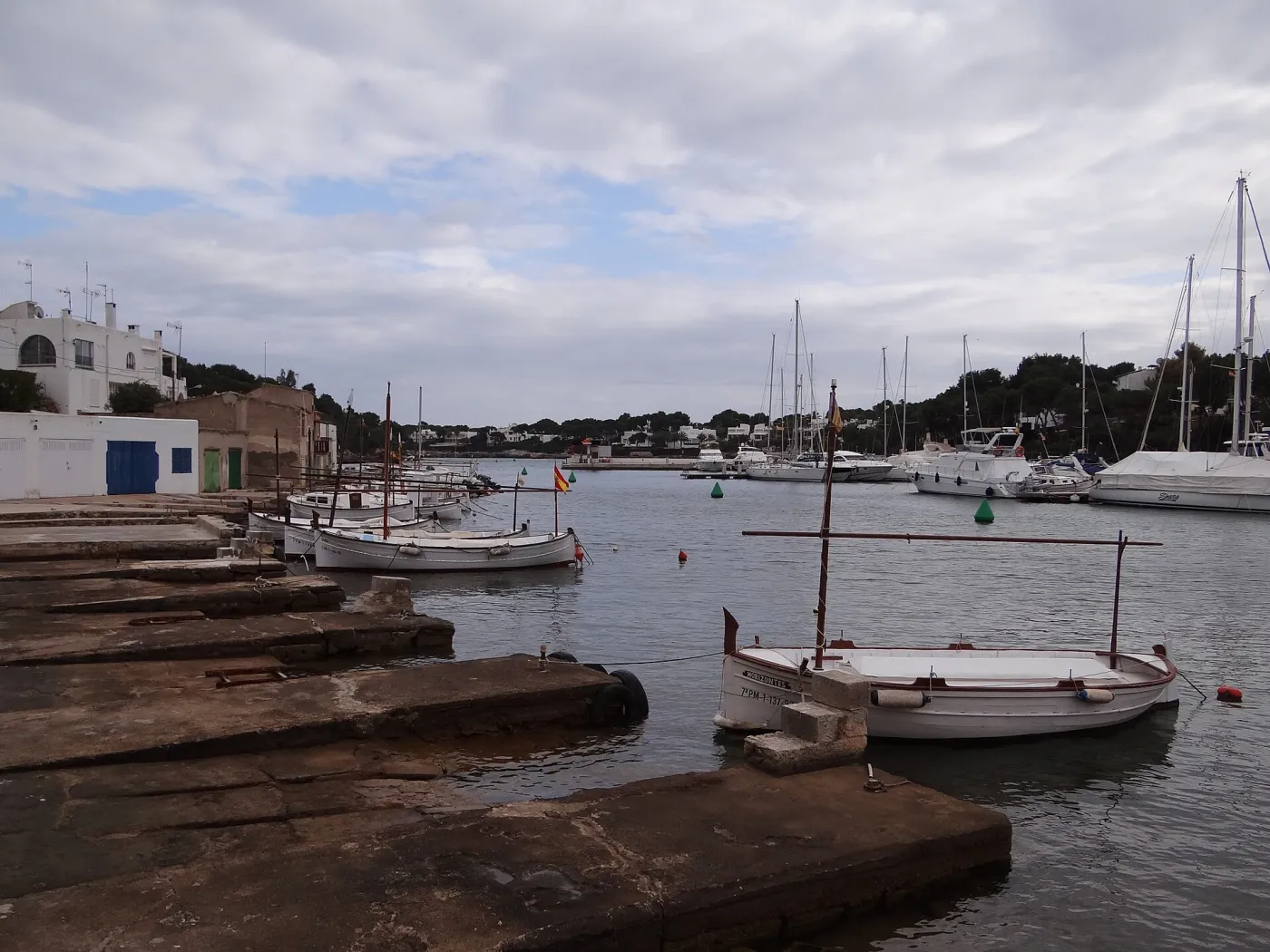
The restaurant scene here is better than you might expect from a resort town. A few recommendations:
Diferent is one of the standout spots. Set in a converted old mill, it serves creative Mediterranean dishes and excellent tapas. The atmosphere is a step above most places in town. Mains from around 18-25 EUR.
Sa Llotja, right on the marina, does good seafood with a view. It’s the sister restaurant of the well-known Sa Llotja in Portocolom. Fresh fish of the day, Mallorcan rice dishes, and a solid wine list. Expect 25-35 EUR per person.
Port Petit is the fine dining option, overlooking the marina. Mediterranean cuisine with French influences, beautifully presented. It’s a splurge (mains 30-45 EUR) but worth it for a special dinner.
Can Trompe is where to go for traditional Mallorcan food. Hearty portions, local recipes, reasonable prices. Menu del dia around 13-15 EUR.
For casual lunches, most of the restaurants on the marina and along the main pedestrian streets offer good value menu del dia deals between 11-15 EUR, typically a starter, main, dessert, and a drink.
Cala d’Or nightlife
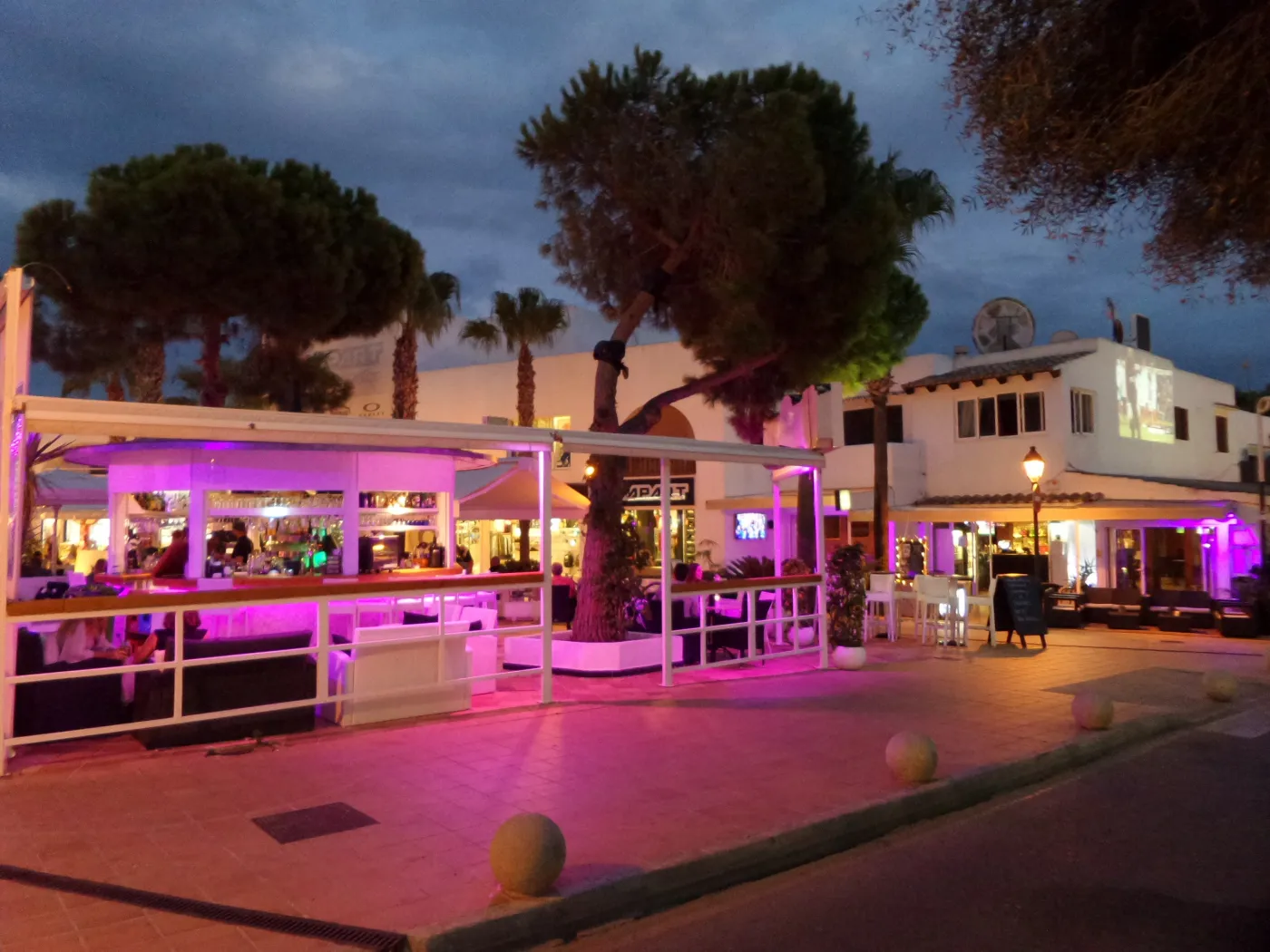
If you’re looking for Magaluf-style clubbing, Cala d’Or isn’t it. And that’s precisely why many people choose it. The nightlife here is more about cocktail bars, live music, and relaxed evenings out.
The main bar streets run along Avenida de Belgica and Carrer d’en Toni Costa, where you’ll find a mix of cocktail bars, pubs, and music venues. Quarterdeck on the marina is good for sunset drinks. Cheeki Tiki Bar makes decent cocktails in a tropical-themed setting.
For live music, Betty’s Music Bar and Patsy Fagan’s have regular acts through the summer season. Harp and Shamrock is the reliable Irish pub if that’s your thing.
If you want to actually dance, Disco Alfa and Chic Palace are the two late-night options, open until the early hours in summer.
Cala d’Or with kids
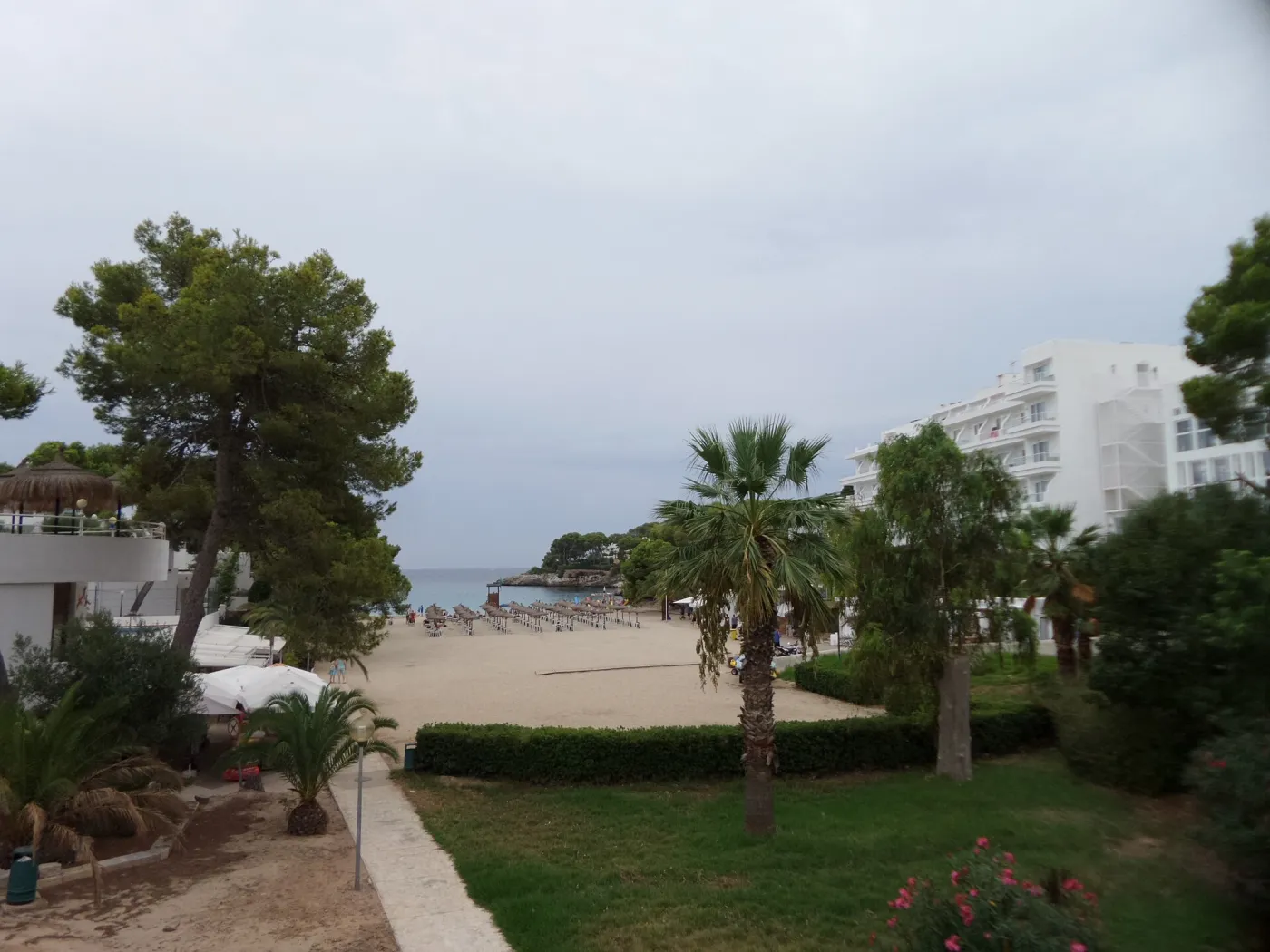
Cala d’Or is one of the better family destinations on the east coast. Here’s why:
Best family beaches: Cala Ferrera has the shallowest water and a lifeguard. Cala Gran has more facilities including a small play area near the beach. Both have easy access without steep paths.
The land train runs two routes through the resort from May to September, connecting the town center with the various beaches. Kids love it, and it saves you walking in the heat. A single ride costs 2.50 EUR, or 4.50 EUR for the full circuit.
Happy Park and Fantasy Park are small children’s fun parks with trampolines, bouncy castles, and games. Nothing huge, but good for an hour or two when the kids need a break from the beach.
Electric boat rental at the marina lets you putter around the coastline without needing a license. Boats hold up to 6 people and cost around 30-40 EUR per hour. A hit with families.
Mondrago Natural Park (mentioned above) has pushchair-friendly paths on the main routes and shallow, calm beaches that are ideal for toddlers.
Best time to visit Cala d’Or
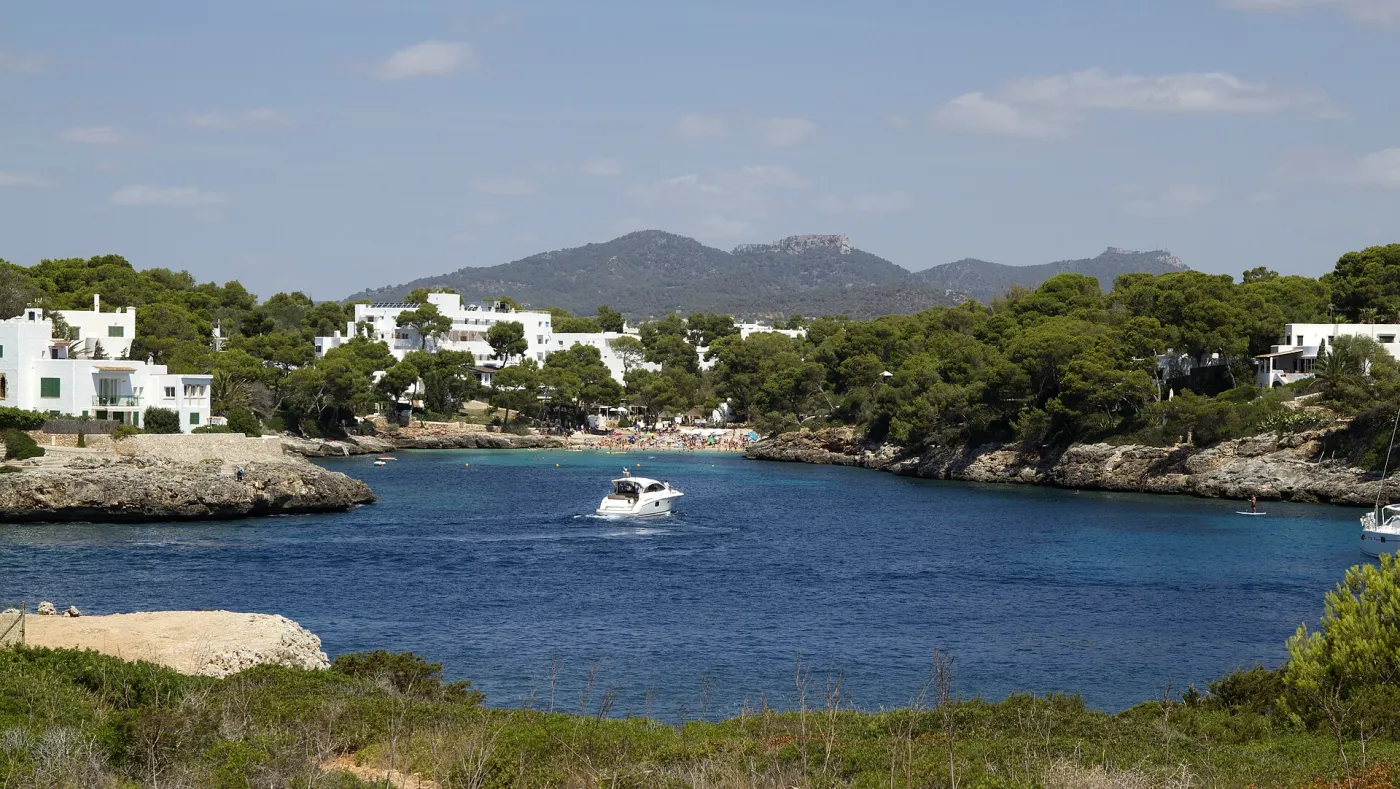
May to June and September to October are the sweet spot. Temperatures sit between 20-27 C, the beaches are open but not packed, and most restaurants and activities are running. September is particularly good because the sea has had all summer to warm up.
July and August are peak season. Expect temperatures up to 32 C, crowded beaches (especially Cala Gran and Cala Ferrera), and higher prices for accommodation. Everything is open and the atmosphere is at its liveliest, but you’ll need to arrive at beaches early to get a good spot.
November to March is quiet season. Many restaurants and hotels close for winter. Temperatures hover around 14-17 C with more rain. The upside: dramatically lower prices, empty hiking trails, and a glimpse of local life without the tourist crowds.
Quick weather reference:
- Warmest month: August (average high 31 C)
- Driest month: July (around 4mm rain, 346 hours of sunshine)
- Wettest month: November (around 67mm rain)
- Sea temperature peak: August (26 C)
Getting around Cala d’Or
The town center is compact and walkable. You can reach the marina, shops, and most restaurants on foot within 10-15 minutes. The beaches are a bit more spread out, with Cala Serena being the farthest (about 20 minutes walk from the center).
The land train (May to September) covers two routes connecting the resort’s main areas, which is helpful for reaching the more distant beaches without a car.
TIB public buses connect Cala d’Or with other towns. Route 515 runs to Campos and Felanitx, route 521 goes to Cala Mondrago, and route 514 connects to Felanitx. They’re infrequent (every 1-2 hours) but usable for day trips if you plan ahead.
Car rental is worth it if you want to visit the day trip spots listed above. Cala d’Or has several rental agencies, or you can pick up a car at Palma Airport. Parking in town is generally manageable outside of August.
Bike rental is available at several shops in town. The terrain around Cala d’Or is relatively flat, making cycling a good way to reach nearby beaches like Cala Sa Nau or Portopetro.
Where to stay in Cala d’Or
A brief orientation to help you choose your base:
Central Cala d’Or puts you within walking distance of the marina, restaurants, and Cala Gran. Best for couples and anyone who wants to be in the middle of things.
Cala Ferrera is slightly quieter with direct beach access. Most of the family-oriented hotels are here. Good for families with young kids who want to minimize walking.
Cala Egos is the most budget-friendly area, a short bus or land train ride from the center. Quieter, more residential, with apartment-style accommodation.
Budget accommodation starts from around 50-60 EUR per night for a simple apartment. Mid-range hotels like Hotel Cala d’Or Playa offer good value with pools and beach proximity. For something more upscale, Inturotel Cala Esmeralda has a great location right by the beach, and AluaSoul Mallorca Resort is a popular adults-only option.
Frequently asked questions
Is Cala d’Or worth visiting?
Yes. It’s one of the most well-rounded destinations on Mallorca’s east coast. The combination of multiple beautiful coves, a charming marina, good restaurants, and easy access to day trips makes it work for couples, families, and groups. It’s not the wildest or most untouched place on the island, but it hits a sweet spot between convenience and character.
Is Cala d’Or expensive?
Mid-range by Mallorca standards. Sun loungers cost around 8-12 EUR per day, a menu del dia lunch runs 11-15 EUR, and a sit-down dinner at a decent restaurant is 20-35 EUR per person. Mid-range hotels average 80-150 EUR per night in high season, cheaper in spring and autumn. It’s not budget Arenal, but it’s not Formentor-expensive either. For the quality of beaches and the setting, we think it’s good value.
Is Cala d’Or tacky?
No, and this is one of its defining qualities. Those building rules set by Josep Costa Ferrer in 1932 still apply: no buildings taller than the pines, white facades only, no high-rises. The result is that Cala d’Or has never developed the neon-sign, souvenir-shop-every-5-meters aesthetic that defines tackier resorts. It’s grown up without going upmarket in a pretentious way. Expect whitewashed lanes and yacht masts, not amusement arcades.
Is Cala d’Or open in April?
Largely yes. Most hotels and restaurants reopen from late March or April onwards after the winter break. The beaches are always accessible (there are no gates). Water temperatures in April are around 16-17°C, which is cool for swimming but fine for a walk or a very committed dip. The land train and some seasonal boat trips may not have started yet, but the town center, shops, and most restaurants are up and running. April is actually a great time to visit if you prefer calm over crowds.
Is Cala d’Or good for couples?
Very. The marina walk at sunset, Cala Esmeralda (small and secluded), dinner at Port Petit, a private boat rental for the afternoon: it’s well set up for couples. The town has enough going on in the evenings without tipping into the kind of atmosphere that makes a romantic trip unpleasant. We’d suggest basing yourself in central Cala d’Or for the best access to the marina and the quieter coves.
Cala d’Or or Cala Millor?
Different vibes entirely. Cala Millor has one long, continuous sandy beach (1.8 km), a wider promenade, and a more classic resort feel. Cala d’Or has multiple small coves, more architectural character, and a prettier marina. Choose Cala Millor if you want a long beach and lots of waterfront bars. Choose Cala d’Or if you prefer exploring different coves and a more refined atmosphere.
Do I need a car in Cala d’Or?
Not for the town itself. Everything in Cala d’Or is walkable, and the land train covers the beach routes in summer. But if you want to visit Mondrago, Calo des Moro, Drach Caves, or other east coast spots, a car makes a big difference. You can also get by with a combination of private transfers and occasional taxis.
How far is Cala d’Or from Palma Airport?
60 km, about 55 minutes by car or private transfer. Public transport takes around 1 hour 45 minutes with a bus change in Palma.
Ready to explore Mallorca?
Book your private transfer and let our local drivers take you there.
Book your transfer